Synchronous Condensers Market Threats Include High Installation Costs, Technological Advancements, and Market Saturation Pressure.

The global synchronous condensers market has traditionally served a crucial role in maintaining power grid stability, particularly by providing reactive power, system inertia, and voltage regulation. However, the market is increasingly facing headwinds that threaten its long-term growth and viability. Key among these are high installation costs, rapid technological advancements in alternative solutions, and growing market saturation, especially in developed regions.
These challenges are reshaping investment decisions, project timelines, and the overall demand landscape for synchronous condensers worldwide. As grid modernization accelerates, industry players must understand these threats to navigate the market effectively and adapt to the shifting energy landscape.
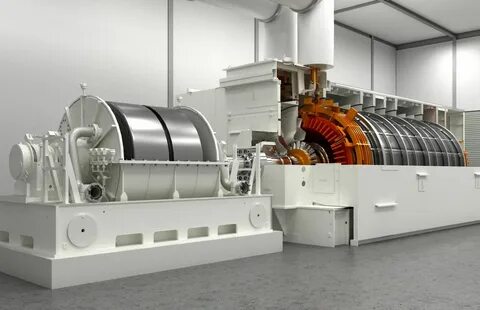
High Installation Costs: A Barrier to Entry and Expansion
One of the most significant obstacles facing the synchronous condensers market is the high capital expenditure (CAPEX) required for installation. The construction of a synchronous condenser facility is a complex and capital-intensive undertaking, often involving civil works, procurement of large rotating equipment, cooling systems, and protective relays. Depending on the size and location, project costs can easily range from tens to hundreds of millions of dollars.
In addition to the upfront investment, these projects involve long lead times—often 12 to 24 months or more—due to the engineering complexity and manufacturing of custom components. This long duration can deter utilities and grid operators that seek fast, flexible solutions to address immediate grid reliability needs.
Operating costs (OPEX) add further pressure. Synchronous condensers require routine maintenance, cooling systems, and in some cases, auxiliary power for startup, which increases lifecycle costs. Moreover, they require specialized personnel for installation and maintenance, adding to labor expenses.
In emerging markets or budget-constrained utilities, these costs are difficult to justify, especially when less expensive and quicker-to-deploy technologies—such as STATCOMs or battery storage—are readily available and often incentivized through government subsidies or green energy programs.
Technological Advancements in Alternative Grid Solutions
Another critical threat to the synchronous condensers market is the rise of advanced grid technologies that offer comparable or even superior performance with enhanced flexibility and lower operational costs.
Technologies such as:
Static synchronous compensators (STATCOMs)
Static VAR compensators (SVCs)
Grid-forming inverters
Hybrid energy systems combining battery storage and smart inverters
…are rapidly evolving and gaining traction across global markets.
These systems can deliver fast-reacting voltage support, synthetic inertia, and frequency stabilization—functions that have traditionally been the domain of synchronous condensers. Unlike rotating machines, these systems are solid-state, meaning they are more compact, require less maintenance, and offer a higher degree of integration with digital grid platforms.
Moreover, software-defined control features in modern inverters allow dynamic tuning, remote operation, and real-time grid responsiveness, making them ideal for modern smart grids. These capabilities are particularly valuable in power systems with a high penetration of renewables, where variability and intermittency require rapid and intelligent response mechanisms.
As R&D investments pour into power electronics and control systems, the performance gap between synchronous condensers and alternatives continues to narrow. Over time, synchronous condensers risk being technologically outpaced unless manufacturers innovate or reposition their products for highly specialized roles within the power grid.
Market Saturation Pressure in Developed Regions
Another significant challenge confronting the synchronous condensers market is saturation in mature markets. In regions such as North America, Western Europe, and parts of East Asia, many grid operators have already invested in synchronous condensers as part of past infrastructure upgrades. The room for additional growth is now limited, as many high-demand substations and transmission points are already equipped with sufficient grid stabilization assets.
In these markets, new installations are largely replacement-driven rather than expansion-driven, resulting in lower growth potential. As aging units approach the end of their lifecycle, the decision often comes down to refurbishment versus replacement with modern alternatives, and the latter increasingly wins due to cost and efficiency considerations.
Moreover, saturation is compounded by evolving regulatory standards and market incentives that favor digital and renewable-aligned technologies. Grid codes are being updated to recognize the capabilities of inverter-based systems and reduce reliance on synchronous inertia. As grid operators seek to comply with these regulations while controlling costs, they are more likely to invest in scalable, future-proof solutions that align with decarbonization goals.
In emerging markets, the picture is more nuanced. While there's still room for growth, these regions are leapfrogging older technologies and moving directly toward newer, cost-effective solutions that can be quickly deployed and integrated with renewable infrastructure.
The Competitive Landscape and Industry Response
Faced with these mounting threats, the synchronous condensers market is seeing a wave of strategic realignments. Leading manufacturers are attempting to counteract these challenges by:
Integrating digital monitoring tools and predictive maintenance systems
Developing modular or containerized synchronous condensers to reduce site work
Targeting niche applications such as remote substations or isolated grids where alternatives are less feasible
Positioning products as part of hybrid systems that combine rotating and solid-state technologies
However, these adaptations come with their own challenges, including added development costs, new competition from electronics and software providers, and uncertain regulatory acceptance.
Conclusion
The synchronous condensers market is at a crossroads. While it continues to offer value in specific grid applications—particularly where inertia and fault current are indispensable—it faces mounting threats that are reshaping its outlook. High installation costs, the rise of technologically advanced alternatives, and market saturation, especially in developed economies, are collectively dampening demand and increasing competitive pressure.
For synchronous condenser manufacturers and stakeholders to remain relevant, innovation, flexibility, and strategic repositioning will be essential. Embracing digital integration, exploring hybrid configurations, and targeting specialized use cases may provide a path forward, but the window for adaptation is narrowing as the energy transition accelerates.