

Blogs
According to a new report from Intel Market Research , the India Silica Fume market was valued at US$ 89 million in 2024 and is projected to reach US$ 128 million by 2032 , growing at a CAGR of 6.2% during the forecast period (2024–2032). This growth is driven by increasing infrastructure development, rising demand for high-performance concrete, and growing awareness of silica fume's benefits in enhancing construction material properties.
What is Silica Fume?
Silica Fume , also known as microsilica, is a by-product of silicon metal and ferrosilicon alloy production. This ultrafine powder consists primarily of amorphous silicon dioxide and is collected from the gases produced during electric arc furnace operations. When used as a supplementary cementitious material in concrete, silica fume significantly enhances compressive strength, durability, and chemical resistance while reducing permeability. These properties make it particularly valuable in specialized construction applications where superior performance is required.
Silica fume is typically categorized into two main types: densified silica fume , which has been processed to reduce its volume for easier handling and transportation, and undensified silica fume , which remains in its original, highly fluffy state. The material finds extensive application in high-performance concrete, refractory products, oil well cementing, and repair materials , making it a critical component in modern construction and industrial applications.
Download Sample Report : India Silica Fume Market - View in Detailed Research Report
Key Market Drivers
1. Infrastructure Development and Government Initiatives
India's massive infrastructure development programs are creating unprecedented demand for high-quality construction materials. The government's National Infrastructure Pipeline (NIP) , which aims to invest approximately ₹111 trillion (US$1.5 trillion) between 2020 and 2025, includes numerous projects in transportation, energy, and urban development. These initiatives require durable construction materials that can withstand India's diverse climatic conditions and increasing structural demands.
Major projects such as the Delhi-Mumbai Industrial Corridor, Smart Cities Mission, and various metro rail systems across Indian cities are driving the adoption of silica fume in concrete formulations. The material's ability to enhance concrete performance while reducing long-term maintenance costs makes it particularly attractive for these large-scale infrastructure projects where longevity and durability are paramount considerations.
2. Growing High-Rise Construction and Specialized Applications
The rapid urbanization across Indian cities has led to increased construction of high-rise buildings and specialized structures that require advanced concrete technology. Silica fume's role in producing high-strength concrete (HSC) and ultra-high-performance concrete (UHPC) makes it essential for these applications. The material improves concrete's mechanical properties, allowing for the construction of taller structures with smaller structural elements, thereby optimizing space utilization and architectural design possibilities.
Furthermore, silica fume finds increasing application in marine structures, bridges, and industrial floors where resistance to chemical attack and abrasion is crucial. The material's ability to significantly reduce chloride ion penetration makes it particularly valuable in coastal regions and marine environments, protecting reinforcement steel from corrosion and extending structure lifespan.
Market Challenges
- Supply chain constraints : The availability of silica fume is directly tied to silicon metal production, creating potential supply-demand imbalances during market fluctuations
- Handling and transportation difficulties : The ultrafine nature of silica fume presents challenges in storage, handling, and transportation, particularly for the undensified variety
- Cost considerations : While offering long-term benefits, the initial cost of silica fume can be higher than traditional supplementary cementitious materials, affecting adoption in price-sensitive segments
- Technical expertise requirements : Proper application requires skilled professionals and precise dosing equipment, which can be a barrier in regions with limited technical capabilities
Opportunities Ahead
The Indian silica fume market presents significant growth opportunities driven by technological advancements and evolving construction practices. The development of value-added silica fume products and specialized formulations for specific applications is creating new market segments. Additionally, the growing emphasis on sustainable construction practices and green building certifications is driving demand for materials that enhance durability and reduce environmental impact.
Recent industry developments include:
- Advancements in dispersion technology improving silica fume's effectiveness in concrete mixtures
- Development of composite materials combining silica fume with other supplementary cementitious materials
- Increasing adoption in precast concrete applications where high early strength is required
- Growing use in shotcrete applications for tunneling and underground construction
Download Sample PDF : India Silica Fume Market - View in Detailed Research Report
Regional Market Insights
- Western India : Leads market share due to extensive industrial development, port infrastructure, and high-rise construction in cities like Mumbai and Pune
- Southern India : Shows strong growth driven by IT infrastructure development, metro rail projects, and coastal infrastructure development
- Northern India : Significant demand from infrastructure projects in the National Capital Region and industrial corridor development
- Eastern India : Emerging market with potential growth from port development and industrial zone establishment
Market Segmentation
By Type
- Densified Silica Fume
- Undensified Silica Fume
By Application
- Concrete
- Refractory
- Oil & Gas
- Others
By End-User
- Infrastructure
- Commercial Construction
- Industrial Construction
- Residential Construction
Get Full Report : India Silica Fume Market - View in Detailed Research Report
Competitive Landscape
The India silica fume market features both international players and domestic suppliers, creating a competitive environment focused on product quality, technical support, and supply chain reliability. Key companies are investing in production capacity expansion, technical application support, and distribution network development to capture market share in this growing sector.
The report provides detailed competitive analysis of major market participants, including:
- Elkem ASA
- Ferroglobe PLC
- RW Silicium GmbH
- Wacker Chemie AG
- Washington Mills
- Simcoa Operations Pty Ltd
- OFZ, a.s.
- Elkon Products Inc.
- CC Metals & Alloys
- Domestic Indian suppliers and distributors
Report Deliverables
- Comprehensive market size and forecast from 2024 to 2032
- Detailed analysis of market drivers, restraints, and opportunities
- Competitive landscape assessment and market share analysis
- Price trend analysis and cost structure assessment
- Detailed segmentation by type, application, and end-user
- Regional analysis and growth prospects
- SWOT analysis of key market players
Get Full Report : India Silica Fume Market - View in Detailed Research Report
Download Sample PDF : India Silica Fume Market - View in Detailed Research Report
Browse More Report:
https://www.intelmarketresearch.com/veterinary-antibacterial-prescription-drugs-market-2817
https://www.intelmarketresearch.com/ketorolac-tromethamine-tablets-market-3036
https://www.intelmarketresearch.com/disposable-nitrile-surgical-gloves-market-2819
https://www.intelmarketresearch.com/x-ray-digital-subtraction-angiography-machine-market-2999
https://www.intelmarketresearch.com/poly-l-lysine-coated-slide-market-3060
https://www.intelmarketresearch.com/video-consultation-medical-service-market-2818
https://www.intelmarketresearch.com/global-india-paraformaldehyde-forecast-market-10352
https://www.intelmarketresearch.com/global-india-battery-modulepack-equipment-forecast-market-10322
https://www.intelmarketresearch.com/global-india-cement-clinkercement-forecast-market-10318
https://www.intelmarketresearch.com/global-india-softwood-lumber-forecast-market-10310
https://www.intelmarketresearch.com/global-india-pvc-foam-board-forecast-market-10316
https://www.intelmarketresearch.com/global-india-cmp-slurry-forecast-market-10353
https://www.intelmarketresearch.com/torque-sensor-for-humanoid-robot-market-2830
https://www.intelmarketresearch.com/natural-plastic-free-chewing-gum-market-3005
About Intel Market Research
Intel Market Research is a leading provider of strategic intelligence, offering actionable insights in biotechnology , pharmaceuticals , and healthcare infrastructure . Our research capabilities include:
- Real-time competitive benchmarking
- Global clinical trial pipeline monitoring
- Country-specific regulatory and pricing analysis
- Over 500+ healthcare reports annually
Trusted by Fortune 500 companies, our insights empower decision-makers to drive innovation with confidence.
Website : https://www.intelmarketresearch.com
International : +1 (332) 2424 294
Asia-Pacific : +91 9169164321
LinkedIn : Follow Us

The global soda ash market is experiencing robust growth, driven by increasing demand from key industries such as glass manufacturing, detergents, chemicals, and water treatment. Soda ash, also known as sodium carbonate (Na₂CO₃), is an essential raw material used in several industrial processes due to its strong alkalinity and versatile chemical properties.
Market Size and Forecast
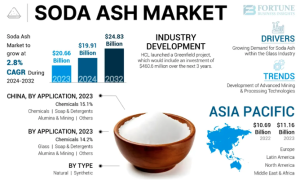
According to Fortune Business Insights, The global soda ash market size was valued at USD 18.74 billion in 2024. The market is projected to grow from USD 15.03 billion in 2025 to USD 23.39 billion by 2032, exhibiting a CAGR of 6.5% during the forecast period. Asia Pacific dominated the soda ash market with a market share of 61.89% in 2024.
The market expansion is primarily driven by rapid industrialization, rising infrastructure development, and increasing consumption of glass products across automotive, construction, and solar industries.
Key Takeaways
Market Value (2024): USD 18.74 billion
Market Value (2032): USD 23.39 billion
Growth Rate (CAGR): 6.5% (2025–2032)
Leading Region: Asia Pacific (61.89% share in 2024)
Major Drivers: Glass manufacturing, detergents, and solar glass demand
Emerging Trend: Transition to sustainable and energy-efficient production
Information Source: https://www.fortunebusinessinsights.com/enquiry/request-sample-pdf/soda-ash-market-110681
Key Market Segments
By Type
Synthetic Soda Ash:
Synthetic soda ash accounted for the largest market share in 2024 owing to its consistent quality and wide applicability in glass manufacturing, detergents, and chemical synthesis.
Natural Soda Ash:
The natural variant is gaining traction due to its lower energy requirement and reduced carbon emissions during production, aligning with sustainability goals.
By Product Type
Dense Soda Ash:
Dense soda ash dominated the market in 2024, driven by strong demand from the glass industry. It is preferred for its high bulk density, low dust content, and stability in manufacturing operations.
Light Soda Ash:
Light soda ash is primarily used in detergent, chemical, and water treatment applications where fast dissolution is required.
By Application
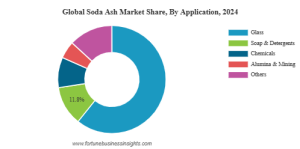
Glass Manufacturing: The largest segment, fueled by growing demand for flat, container, and solar glass.
Soaps and Detergents: Used as a water-softening and cleaning agent, particularly in household and industrial detergents.
Chemicals and Mining: Employed in the production of sodium silicates, bicarbonates, and alumina.
Water Treatment: Acts as a pH regulator and neutralizing agent for industrial and municipal water systems.
List of Key Soda Ash Companies Profiled
- Tata Chemicals Ltd. (India)
- Ciner Group (Turkey)
- NIRMA (India)
- Solvay (Belgium)
- DCW Ltd. (India)
- Shandong Haihua Group Co., Ltd. (China)
- Sudarshan Mineral (India)
- Şişecam (Turkey)
- Angel Chemicals Private Limited (India)
- Radhe Enterprise (India)
- InoChem (Saudi Arabia)
Regional Insights
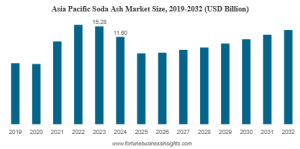
The Asia Pacific region dominated the global soda ash market in 2024, accounting for approximately 61.89% of total market share. This dominance is attributed to strong glass and detergent production capacities in China and India, along with rapid infrastructure growth and urbanization.
North America and Europe are witnessing steady demand supported by industrial applications and the development of sustainable soda ash production technologies. Meanwhile, emerging economies in the Middle East, Africa, and Latin America present lucrative opportunities due to increasing construction and water treatment activities.
Market Trends and Developments
Shift Toward Sustainable Production:
Manufacturers are investing in green technologies and low-emission processes such as the e.Solvay process to minimize carbon footprints and improve energy efficiency.
Technological Advancements:
Adoption of advanced mining techniques, real-time monitoring, and automation to optimize production and reduce operational costs.
Rising Solar Glass Demand:
Rapid expansion of the solar energy sector is significantly increasing the consumption of high-purity soda ash used in solar glass manufacturing.
Expansion in Emerging Markets:
Growing population, industrial development, and higher standards of living in Asia, Africa, and Latin America are boosting demand for detergents and consumer goods containing soda ash.
Challenges
Fluctuating Raw Material and Energy Costs:
Price volatility of key inputs such as limestone, salt, and energy resources can impact production economics.
Environmental Regulations:
Stringent emission and waste disposal regulations are compelling producers to adopt cleaner technologies, leading to increased production costs.
Market Price Pressure:
Oversupply in certain regions and intense competition among global producers can affect profitability.
The global soda ash market is set to continue expanding steadily through 2032, driven by high demand from glass and detergent industries and growing emphasis on sustainable production practices. The market’s transition toward low-carbon, energy-efficient processes will shape the competitive landscape in the coming years.
Companies focusing on cost efficiency, environmental sustainability, and technological innovation will gain a strong competitive edge. Furthermore, rising investments in renewable energy infrastructure, particularly solar power, will provide significant opportunities for market participants.
Information Source: https://www.fortunebusinessinsights.com/soda-ash-market-110681
KEY INDUSTRY DEVELOPMENTS
- December 2023: Solvay introduced a new soda ash production process named e.Solvay process. This new technology promises to cut CO₂ emissions by 50%, reduce energy, water, and salt consumption by 20%, and decrease limestone use and residues by 30%.
- June 2023: Tata Chemicals announced a USD 968.0 million capex plan, including a 380 KT salt capacity addition in the U.K. and Mithapur, India. This would boost its global salt capacity to 2.3 MT and India’s to 1.8 MT. The investments aimed to support growth, sustainability, and increased production across key product lines.
Zirconia Toughened Alumina (ZTA) Bead Market Growth Analysis, Market Dynamics, Key Players and Innovations, Outlook and Forecast 2025-2032
By Market research desk, 2025-10-08
According to a new report from Intel Market Research , the global Zirconia Toughened Alumina (ZTA) Bead market was valued at USD 10.5 million in 2024 and is projected to reach USD 12.5 million by 2032 , growing at a steady CAGR of 2.5% during the forecast period (2025–2032). This growth is driven by expanding industrial applications in mining, ceramics, and pharmaceuticals, coupled with technological advancements in ceramic grinding media that enhance operational efficiency and durability.
What are Zirconia Toughened Alumina (ZTA) Beads?
Zirconia Toughened Alumina (ZTA) beads are advanced ceramic grinding media composed primarily of alumina (Al 2 O 3 ) integrated with zirconia (ZrO 2 ). This unique combination enhances mechanical properties, offering superior strength, toughness, and wear resistance compared to traditional alumina or zirconia beads alone. The incorporation of zirconia into the alumina matrix results in a material that effectively resists fracture and deformation during high-energy milling processes, making it ideal for demanding industrial applications.
These specialized beads are widely utilized across multiple sectors including mineral processing, ceramic manufacturing, paints and coatings, and pharmaceutical production. Their ability to maintain dimensional stability while minimizing product contamination makes them particularly valuable in precision grinding applications where consistency and purity are critical.
Download Sample Report : https://www.intelmarketresearch.com/download-free-sample/2838/zirconia-toughened-alumina-bead-market
Key Market Drivers
1. Expanding Industrial Applications in Mining and Ceramics
The global mining industry's continued expansion creates substantial demand for high-performance grinding media like ZTA beads. These advanced ceramic beads demonstrate remarkable wear resistance and fracture toughness, making them ideal for mineral processing applications. As ore grades decline internationally, the need for finer particle grinding intensifies – a process where ZTA beads outperform traditional alternatives by delivering superior milling efficiency and longer operational lifespans.
2. Technological Advancements in Bead Manufacturing
Recent innovations in ceramic processing techniques have significantly improved the quality and performance characteristics of ZTA beads. Manufacturers have developed proprietary sintering methods that optimize the zirconia-alumina matrix structure, yielding products with enhanced mechanical properties. These technological improvements have increased bead density while reducing internal defects, resulting in longer service life and improved grinding performance across various industrial applications.
3. Growing Pharmaceutical Sector Requirements
The pharmaceutical sector's increasing adoption of nanoparticle-based drug formulations presents significant opportunities for ZTA bead manufacturers. These specialized ceramic beads are particularly suited for precise, contamination-free grinding required in pharmaceutical applications. The ongoing development of biopharmaceuticals and injectable drug formulations further reinforces this demand, as these applications require exceptional milling consistency and purity standards that ZTA beads can reliably provide.
Market Challenges
- High production costs : Advanced manufacturing processes and premium raw materials contribute to elevated product pricing, limiting accessibility in price-sensitive markets
- Competition from alternative grinding media : Established solutions including yttria-stabilized zirconia beads and steel media maintain popularity in applications where ultra-fine grinding isn't critical
- Technical limitations in extreme conditions : Certain high-impact industrial processes can exceed the mechanical thresholds of standard ZTA formulations
- Supply chain vulnerabilities : Dependence on specialized raw materials creates potential bottlenecks affecting production stability
Opportunities Ahead
The global industrial landscape presents numerous growth opportunities for ZTA bead manufacturers, particularly through expansion into emerging markets and new application sectors. The rapid expansion of battery manufacturing for electric vehicles and renewable energy storage creates significant potential, as battery material production requires precise particle size control and contamination-free processing.
Strategic partnerships with local distributors and targeted product development for regional applications can help manufacturers establish footholds in developing markets. Additionally, the increasing emphasis on sustainable manufacturing processes supports demand for durable grinding media that reduces waste and energy consumption, positioning ZTA beads favorably in environmentally conscious markets.
Notably, industry leaders including Saint-Gobain ZirPro and KYOCERA GROUP have announced expansion strategies focusing on capacity increases in Southeast Asia and development of specialized formulations for emerging applications such as battery materials processing.
Download Sample PDF : https://www.intelmarketresearch.com/download-free-sample/2838/zirconia-toughened-alumina-bead-market
Regional Market Insights
- Asia-Pacific : Dominates the global market with robust industrial activity in mining, ceramics, and paints and coatings sectors, particularly in China and India
- North America : Represents a mature yet technologically advanced market characterized by stringent quality standards and high-performance application requirements
- Europe : Maintains significant market share driven by advanced manufacturing sectors and strict environmental regulations favoring sustainable grinding solutions
- Latin America : Shows steady growth supported by expanding mining operations and industrial development in Brazil and Argentina
- Middle East & Africa : Emerging market showing potential growth as industrial development accelerates in key countries including South Africa and Saudi Arabia
Market Segmentation
By Type
- Low Zirconia Content
- Medium Zirconia Content
- High Zirconia Content
By Application
- Mining and Mineral Processing
- Ceramics Manufacturing
- Paints and Coatings
- Pharmaceuticals
- Others
By End User
- Industrial Manufacturers
- Specialty Chemical Producers
- Research and Development Facilities
By Region
- North America
- Europe
- Asia-Pacific
- Latin America
- Middle East & Africa
Get Full Report : https://www.intelmarketresearch.com/materials-and-chemicals/2838/zirconia-toughened-alumina-bead-market
Competitive Landscape
The global ZTA bead market features both established industry leaders and emerging regional players, creating a moderately fragmented competitive environment. Saint-Gobain ZirPro maintains a dominant position through superior product quality and extensive distribution networks, while KYOCERA GROUP has strengthened its market position through vertical integration and strategic collaborations.
Mid-sized players like Advanced Ceramic Materials and CS Ceramic have been gaining traction by specializing in customized ZTA bead solutions for niche applications. Technological innovators such as DURA CO are reshaping competitive dynamics through patented manufacturing processes that enhance product performance characteristics.
The report provides comprehensive competitive profiling of key market participants, including:
- Saint-Gobain ZirPro (France)
- KYOCERA GROUP (Japan)
- Advanced Ceramic Materials (U.S.)
- DURA CO (South Korea)
- CS Ceramic (China)
- Stanford Advanced Materials (U.S.)
- SASA (Turkey)
- CHEMCO (U.S.)
Report Deliverables
- Global and regional market forecasts from 2025 to 2032
- Strategic insights into technological developments and application expansions
- Market share analysis and competitive benchmarking
- Pricing trend analysis and cost structure assessment
- Comprehensive segmentation by type, application, end user, and geography
Get Full Report : https://www.intelmarketresearch.com/materials-and-chemicals/2838/zirconia-toughened-alumina-bead-market
Download Sample PDF : https://www.intelmarketresearch.com/download-free-sample/2838/zirconia-toughened-alumina-bead-market
Browse more related report
https://www.intelmarketresearch.com/smart-pharmacy-dispensing-system-market-2895
https://www.intelmarketresearch.com/single-use-bioprocessing-system-for-vaccine-market-2832
https://www.intelmarketresearch.com/prenatal-vitamin-tablets-market-2827
https://www.intelmarketresearch.com/global-india-plant-protein-forecast-market-10367
https://www.intelmarketresearch.com/united-states-rape-honey-market-10563
https://www.intelmarketresearch.com/global-india-color-coated-steel-forecast-market-10397
https://www.intelmarketresearch.com/global-india-security-labels-forecast-market-10350
https://www.intelmarketresearch.com/indoor-gunshot-detection-system-market-3175
https://www.intelmarketresearch.com/baby-infant-hydrolyzed-formula-milk-powder-market-2822
https://www.intelmarketresearch.com/anti-mould-powder-market-2849
https://www.intelmarketresearch.com/acrylic-water-base-bonding-adhesive-market-2894
https://www.intelmarketresearch.com/lead-antimony-concentrate-market-3473
https://www.intelmarketresearch.com/radome-market-13638
https://www.intelmarketresearch.com/pulmonary-artery-catheter-market-13586
About Intel Market Research
Intel Market Research is a leading provider of strategic intelligence, offering actionable insights in advanced materials , industrial manufacturing , and chemical processing . Our research capabilities include:
- Real-time competitive benchmarking
- Global industrial market monitoring
- Country-specific regulatory and pricing analysis
- Over 500+ industry reports annually
Trusted by Fortune 500 companies, our insights empower decision-makers to drive innovation with confidence.
Website : https://www.intelmarketresearch.com
International : +1 (332) 2424 294
Asia-Pacific : +91 9169164321
LinkedIn : Follow Us
The global soy protein ingredients market was valued at USD 10.80 billion in 2024 and is projected to reach USD 11.37 billion in 2025. By 2032, the market is expected to attain USD 18.02 billion, expanding at a CAGR of 6.81% during the forecast period (2025–2032).
In 2024, the Asia Pacific region dominated the market, accounting for a commanding 45.37% share.
Soy protein serves as a key source of essential amino acids and plays a vital role in supporting human nutrition and overall health. Derived from soybeans through methods such as crushing, extraction, and extrusion, soy protein ingredients are available in multiple forms, including soy flour, protein isolate, and concentrate. These ingredients are widely utilized across food processing and animal feed industries for their high nutritional value and versatile functionality.
Information Source: https://www.fortunebusinessinsights.com/soy-protein-ingredients-market-109129
Market Trends
Technological Advancements Enhance Product Diversity
Ongoing innovations in processing technology have significantly expanded the versatility of soy protein ingredients. Modern production methods now produce soy protein in diverse forms such as powders, flakes, chunks, and chips, which cater to a broader range of applications in both food manufacturing and feed formulations. This improved product adaptability has been a key driver behind the growing market demand.
Segmentation Insights
The global soy protein ingredients market is segmented by ingredient type, form, category, and application. Based on ingredient type, the market includes soy protein isolate, concentrate, soy flour, and textured soy protein (TSP), with soy flour accounting for the largest share due to its extensive use in processed foods and animal feed. In terms of form, the dry variant dominates owing to its longer shelf life, cost-effectiveness, and ease of storage and transportation compared to the liquid form. By category, the conventional segment leads the market, supported by the continued reliance on traditional farming and processing methods across key production regions. When segmented by application, the food industry emerges as the major end-use sector, driven by the growing integration of soy-based components into processed foods, ready-to-eat products, and plant-based meat alternatives.
Regional Insights
The global soy protein ingredients market is segmented geographically into North America, Europe, Asia Pacific, South America, and the Middle East & Africa. Among these regions, Asia Pacific led the market in 2024 with an estimated valuation of USD 4.90 billion, driven by China’s strong position as a major production and export hub supported by advanced agricultural infrastructure. In North America, particularly in the U.S. and Canada, demand is rising rapidly due to the increasing adoption of vegan and flexitarian diets that emphasize plant-based proteins. Meanwhile, in Europe, consumers are progressively shifting toward soy-based protein products as part of a wider movement toward plant-focused nutrition and sustainable food consumption.
Competitive Landscape
Strategic Initiatives Drive Market Expansion
The global soy protein ingredients market is moderately competitive, comprising both established multinational corporations and emerging regional players. Companies are focusing on strategic mergers and acquisitions, innovation in product formulation, and geographical expansion to meet changing consumer needs and tap into new markets.
Report Coverage
This report offers a comprehensive assessment of the soy protein ingredients industry, encompassing market size, segmentation by ingredient type and form, category-wise performance, and application analysis. It also highlights the latest market trends, regional developments, and strategic actions undertaken by leading companies to strengthen their market positions.
Key Market Participants
- ADM (U.S.)
- Wilmar International Limited (Singapore)
- Cargill, Incorporated (U.S.)
- International Flavors and Fragrances Inc. (U.S.)
- CHS Inc. (U.S.)
- BRF Global (Brazil)
- Fuji Oil Holdings Inc. (Japan)
- Bunge Global SA (U.S.)
- The Scoular Company (U.S.)
- Crown Soya Protein Limited (China)
Get Sample PDF Brochure: https://www.fortunebusinessinsights.com/enquiry/request-sample-pdf/soy-protein-ingredients-market-109129
Recent Industry Development
- February 2024: Amfora introduced a new line of soy-based ingredients, including soy flour, protein crisps, and textured vegetable protein (TVP). Developed using a combination of traditional processing methods and Amfora’s proprietary technology, these products offer improved nutritional quality and performance characteristics, catering to both food and feed industries.
According to a new report from Intel Market Research , the India Paraformaldehyde Market was valued at US$ 89 million in 2024 and is projected to reach US$ 123 million by 2032 , growing at a CAGR of 5.5% during the forecast period (2024–2032). This steady growth is driven by escalating demand from resin manufacturing, agricultural applications, and the pharmaceutical sector, alongside advancements in producing high-purity, low-emission paraformaldehyde products.
What is Paraformaldehyde?
Paraformaldehyde is the polymerized form of formaldehyde, typically appearing as a white, solid powder. It serves as a stable and convenient source of formaldehyde, which is released upon heating. This chemical is crucial across numerous industries because it provides controlled formaldehyde release for various synthesis and manufacturing processes. Its primary function lies in producing resins, acting as a disinfectant, and serving as a chemical intermediate in agricultural and pharmaceutical formulations.
Unlike formaldehyde gas, paraformaldehyde is easier to handle, transport, and store, making it a preferred choice for industrial applications requiring precise formaldehyde dosing. It is commercially available in different purity grades, commonly 91%-93% and 95%-97% , to meet specific industrial requirements.
Download Sample Report : India Paraformaldehyde Market - View in Detailed Research Report
Key Market Drivers
1. Booming Resin and Adhesive Manufacturing
The expansion of India's construction, automotive, and furniture industries is a primary catalyst for paraformaldehyde demand. It is an essential raw material for producing urea-formaldehyde (UF) and phenol-formaldehyde (PF) resins , which are fundamental binders in particle boards, plywood, and laminates. With India's construction sector growing at approximately 7-9% annually and government initiatives like 'Housing for All' and smart city projects, the consumption of these resins has surged significantly. This industrial growth directly translates to increased paraformaldehyde consumption, as it provides the necessary formaldehyde for resin synthesis.
2. Growing Agricultural and Pharmaceutical Applications
In agriculture, paraformaldehyde is used in soil sterilization and as a chemical intermediate for manufacturing certain herbicides and pesticides. India's focus on enhancing agricultural productivity to support its large population fuels this demand. Furthermore, the pharmaceutical industry utilizes it in synthesizing various drugs and vaccines. The post-pandemic emphasis on healthcare infrastructure and vaccine manufacturing capabilities in India has bolstered its use in this sector. The country's pharmaceutical industry, often termed the 'pharmacy of the world,' relies on such key intermediates for producing a wide range of medicines, creating a stable and growing demand stream.
3. Development of Advanced Product Formulations
Manufacturers are increasingly focusing on developing low-emission and high-purity paraformaldehyde grades to meet stringent environmental regulations and specific industrial needs. These advanced products offer better performance in resin curing, reduced environmental impact, and enhanced safety profiles. This innovation is particularly important as industries worldwide, including in India, adopt greener manufacturing practices. The development of these specialized grades allows manufacturers to cater to niche, high-value applications, thereby expanding their market reach and supporting value-based growth alongside volume growth.
Market Challenges
- Stringent Environmental Regulations : The production and use of formaldehyde-based products are heavily regulated due to environmental and health concerns regarding VOC emissions and toxicity, potentially increasing compliance costs.
- Volatility in Raw Material Prices : Paraformaldehyde production is dependent on methanol and formaldehyde, whose prices are subject to fluctuations in global energy and petrochemical markets, impacting profit margins.
- Competition from Substitutes : In some applications, alternative chemicals or different formaldehyde-releasing agents can pose a competitive threat, pressuring market players to continuously innovate and justify paraformaldehyde's value proposition.
Opportunities Ahead
The Indian market presents significant growth opportunities, particularly through export potential and technological advancements . India's strategic position allows it to serve growing markets in Southeast Asia, the Middle East, and Africa.
Key players are capitalizing on these opportunities by:
- Investing in Capacity Expansion : Major manufacturers are scaling up production to meet both domestic and international demand.
- Focusing on R&D : Developing new application methods and purer grades to open up new market segments and applications.
- Forming Strategic Partnerships : Collaborating with end-user industries to develop tailored solutions and strengthen supply chains.
Furthermore, the push towards sustainable and bio-based chemicals is encouraging research into greener production processes for paraformaldehyde, which could unlock new avenues for growth aligned with global sustainability trends.
Download Sample PDF : India Paraformaldehyde Market - View in Detailed Research Report
Regional Market Insights
The demand for paraformaldehyde in India is not uniform but is concentrated in industrial and agricultural hubs.
- Western and Northern India : These regions lead consumption due to a high concentration of resin manufacturing units, chemical plants, and large-scale agricultural activity. States like Gujarat and Maharashtra are major industrial centers driving demand.
- Southern India : Growing pharmaceutical and agrochemical industries in states like Tamil Nadu and Karnataka contribute significantly to market growth.
- Eastern India : While currently a smaller market, increasing industrial investment and agricultural development present future growth potential.
The government's focus on developing industrial corridors and boosting manufacturing through policies like 'Make in India' is expected to further distribute and increase demand across the country in the coming years.
Market Segmentation
By Type
- PF (91%-93%)
- PF (95%-97%)
By Application
- Agriculture
- Resins and Adhesives
- Paints and Coatings
- Others (including pharmaceuticals and disinfectants)
By End User
- Chemical Manufacturing Industries
- Agro-Chemical Companies
- Pharmaceutical Companies
- Paint and Coating Manufacturers
Get Full Report : India Paraformaldehyde Market - View in Detailed Research Report
Competitive Landscape
The India Paraformaldehyde Market features a mix of global chemical giants and strong domestic players. Competition is based on product quality, price, supply chain reliability, and technical support.
The report provides an in-depth competitive analysis of key players, including:
- Niacet Corporation
- INEOS Group
- Celanese Corporation
- Merck KGaA
- Gujarat Alkalies and Chemicals Limited (GACL)
- Formaldehyde Chemicals Limited
- Other prominent regional manufacturers and suppliers
These companies are actively engaged in strategic initiatives such as capacity expansions, process optimizations, and long-term supply agreements with key end-users to strengthen their market positions.
Report Deliverables
- Comprehensive market size and forecast from 2024 to 2032
- Detailed analysis of market drivers, restraints, and opportunities
- In-depth competitive landscape and market share analysis
- Pricing analysis and trend assessment
- Detailed segmentation analysis by type, application, and end-user
- Insights into regulatory framework and impact analysis
- Strategic recommendations for market participants
Get Full Report Here : India Paraformaldehyde Market - View in Detailed Research Report
Download Sample PDF : India Paraformaldehyde Market - View in Detailed Research Report
Browse More Report:
https://www.intelmarketresearch.com/veterinary-antibacterial-prescription-drugs-market-2817
https://www.intelmarketresearch.com/ketorolac-tromethamine-tablets-market-3036
https://www.intelmarketresearch.com/disposable-nitrile-surgical-gloves-market-2819
https://www.intelmarketresearch.com/x-ray-digital-subtraction-angiography-machine-market-2999
https://www.intelmarketresearch.com/poly-l-lysine-coated-slide-market-3060
https://www.intelmarketresearch.com/video-consultation-medical-service-market-2818
https://www.intelmarketresearch.com/global-india-silica-fume-forecast-market-10332
https://www.intelmarketresearch.com/global-india-battery-modulepack-equipment-forecast-market-10322
https://www.intelmarketresearch.com/global-india-cement-clinkercement-forecast-market-10318
https://www.intelmarketresearch.com/global-india-softwood-lumber-forecast-market-10310
https://www.intelmarketresearch.com/global-india-pvc-foam-board-forecast-market-10316
https://www.intelmarketresearch.com/global-india-cmp-slurry-forecast-market-10353
https://www.intelmarketresearch.com/torque-sensor-for-humanoid-robot-market-2830
https://www.intelmarketresearch.com/natural-plastic-free-chewing-gum-market-3005
About Intel Market Research
Intel Market Research is a leading provider of strategic intelligence, offering actionable insights in biotechnology , pharmaceuticals , and healthcare infrastructure . Our research capabilities include:
- Real-time competitive benchmarking
- Global clinical trial pipeline monitoring
- Country-specific regulatory and pricing analysis
- Over 500+ healthcare reports annually
Trusted by Fortune 500 companies, our insights empower decision-makers to drive innovation with confidence.
Website : https://www.intelmarketresearch.com
International : +1 (332) 2424 294
Asia-Pacific : +91 9169164321
LinkedIn : Follow Us
Global Radio Frequency and Microwave Filter Market Research Report 2025(Status and Outlook)
By SiliconSage, 2025-10-08
The global Radio Frequency and Microwave Filter Market , valued at a robust US$ 3,840 million in 2024, is on a trajectory of significant expansion, projected to reach US$ 6,940 million by 2032. This growth, representing a compound annual growth rate (CAGR) of 8.7%, is detailed in a comprehensive new report published by Semiconductor Insight. The study highlights the critical role these essential components play in ensuring signal integrity and spectrum efficiency across modern wireless communication, defense, and broadcasting systems.
RF and microwave filters, fundamental for isolating specific frequency bands and rejecting unwanted signals, have become indispensable in minimizing interference and optimizing system performance. Their advanced designs enable precise frequency management in increasingly crowded spectral environments, making them a cornerstone of next-generation technologies like 5G, satellite communications, and advanced radar systems.
5G Infrastructure Rollout: The Primary Growth Engine
The report identifies the global deployment of 5G networks as the paramount driver for RF and microwave filter demand. With the telecommunications segment accounting for a dominant share of the market, the correlation is direct and substantial. The relentless push for higher data rates and lower latency necessitates advanced filtering solutions, particularly in massive MIMO antennas and small cell base stations.
"The massive investments in 5G infrastructure, particularly across the Asia-Pacific region which leads global deployments, is a key factor in the market's dynamism," the report states. With global 5G subscriptions projected to exceed 2.6 billion by 2025, the demand for high-performance filters, especially BAW and advanced SAW types capable of handling higher frequencies, is set to intensify. The transition to millimeter-wave spectrum and network densification further compounds this need for sophisticated filtering technology.
Read Full Report: https://semiconductorinsight.com/report/global-radio-frequency-and-microwave-filter-market/
Market Segmentation: SAW Filters and Telecommunications Applications Dominate
The report provides a detailed segmentation analysis, offering a clear view of the market structure and key growth segments:
Segment Analysis:
By Type
- SAW Filters
- BAW Filters
- Ceramic Filters
- Cavity Filters
- Others
By Application
- Telecommunications
- Military and Defense
- Broadcast Radio
- Television
- Others
By End User
- Telecom Operators
- Defense Organizations
- Electronics Manufacturers
- Broadcasters
- Others
Download FREE Sample Report:
Global Radio Frequency and Microwave Filter Market - View in Detailed Research Report
Competitive Landscape: Key Players and Strategic Focus
The report profiles key industry players, including:
-
TTE Technology Inc. (U.S.)
-
API Technologies (U.S.)
-
RS Microwave (U.S.)
-
KandL Microwave (U.S.)
-
DOVER MPG (U.S.)
-
Anatech Electronics (U.S.)
-
LORCH Microwave (Germany)
-
Networks International (UK)
-
Jingxin Microwave Technology (China)
-
EWT Filters (U.S.)
These companies are focusing on technological advancements, such as developing filters for higher frequency bands and miniaturization for consumer devices, alongside geographic expansion into high-growth regions to capitalize on the 5G and IoT boom.
Emerging Opportunities in Satellite Communications and Autonomous Vehicles
Beyond traditional telecom drivers, the report outlines significant emerging opportunities. The rapid expansion of low-earth orbit (LEO) satellite constellations for global internet coverage demands highly reliable filters for ground stations and user terminals. Furthermore, the advancement of autonomous vehicle technology presents new growth avenues, requiring robust radar filtering for object detection and collision avoidance systems. The integration of AI for dynamic spectrum management is also a major trend, enabling smarter, more efficient filter designs that can adapt to real-time network conditions.
Report Scope and Availability
The market research report offers a comprehensive analysis of the global and regional RF and Microwave Filter markets from 2025–2032. It provides detailed segmentation, market size forecasts, competitive intelligence, technology trends, and an evaluation of key market dynamics.
For a detailed analysis of market drivers, restraints, opportunities, and the competitive strategies of key players, access the complete report.
Get Full Report Here: https://semiconductorinsight.com/report/global-radio-frequency-and-microwave-filter-market/
Download Sample Report: https://semiconductorinsight.com/download-sample-report/?product_id=95984
Related Reports:
https://semiconductorinsight.com/report/global-radio-frequency-and-microwave-filter-market/
https://semiconductorinsight.com/report/global-neuromorphic-processing-unit-market/
https://semiconductorinsight.com/report/architectural-led-lighting-market/
https://semiconductorinsight.com/report/non-sparking-explosion-proof-electrical-connector-market/
https://semiconductorinsight.com/report/dlp-light-engine-market/
https://semiconductorinsight.com/report/global-cellular-baseband-processor-market/
https://semiconductorinsight.com/report/uhv-e-beam-source-market/
https://semiconductorinsight.com/report/global-acoustic-ptfe-vent-membrane-market/
https://semiconductorinsight.com/report/global-acoustic-ptfe-vent-membrane-market/
https://semiconductorinsight.com/report/point-of-load-power-chip-market/
https://semiconductorinsight.com/report/output-flange-market/
https://semiconductorinsight.com/report/global-automotive-ecus-and-dcus-market/
https://semiconductorinsight.com/report/global-advanced-electronic-packaging-market/
https://semiconductorinsight.com/report/global-2-finger-robot-gripper-market/
https://semiconductorinsight.com/report/battery-protection-system-chip-market/
About Semiconductor Insight
Semiconductor Insight is a leading provider of market intelligence and strategic consulting for the global semiconductor and high-technology industries. Our in-depth reports and analysis offer actionable insights to help businesses navigate complex market dynamics, identify growth opportunities, and make informed decisions. We are committed to delivering high-quality, data-driven research to our clients worldwide.
Website : https://semiconductorinsight.com/
International : +91 8087 99 2013
LinkedIn : Follow Us
According to a new report from Intel Market Research , the India Plant Protein Market was valued at US$ 567 million in 2024 and is projected to reach US$ 945 million by 2032 , growing at a robust CAGR of 8.9% during the forecast period (2024–2032). This substantial growth is driven by rising vegetarianism, increasing health consciousness among consumers, growing demand for plant-based meat alternatives, and advancements in protein extraction technologies.
What is Plant Protein?
Plant protein refers to protein derived from plant sources such as soy, wheat, peas, rice, and other legumes, used extensively in food, nutritional products, and various industrial applications. Unlike animal-based proteins, plant proteins offer a sustainable, ethical, and often hypoallergenic alternative, aligning with modern consumer trends toward health and environmental sustainability. These proteins are processed into various forms including isolates, concentrates, and textured proteins to meet diverse functional and nutritional requirements across multiple industries.
The market encompasses a wide range of products from traditional staples like soy flour to innovative pea protein isolates used in meat alternatives and sports nutrition. With India's large vegetarian population and growing health awareness, plant proteins have transitioned from niche health products to mainstream nutritional components.
Download Sample Report : India Plant Protein Market - View in Detailed Research Report
Key Market Drivers
1. Rising Vegetarianism and Health Consciousness
India's deeply rooted cultural and religious practices have fostered a significant vegetarian population, estimated at over 500 million people according to recent demographic studies. This cultural foundation, combined with growing health awareness, creates a natural market for plant-based proteins. Consumers are increasingly seeking protein-rich alternatives to meat, driven by concerns about cholesterol, animal welfare, and environmental sustainability.
The health and wellness trend has gained remarkable momentum, particularly among urban populations and younger demographics. Fitness enthusiasts, athletes, and health-conscious consumers are incorporating plant proteins into their diets as nutritional supplements, meal replacements, and functional food ingredients. This shift is supported by growing scientific evidence highlighting the health benefits of plant-based diets, including reduced risk of chronic diseases and improved digestive health.
2. Increasing Demand for Plant-Based Meat Alternatives
The plant-based meat segment has emerged as one of the fastest-growing categories within the Indian food industry. While the global plant-based meat market has seen exponential growth, India's version is uniquely tailored to local tastes and dietary preferences. Companies are developing innovative products that mimic traditional Indian meat dishes using plant proteins, making them accessible to both vegetarians and flexitarians seeking to reduce meat consumption.
Major food companies and startups are investing significantly in research and development to improve the taste, texture, and nutritional profile of plant-based meat products. The successful launch of products like plant-based kebabs, biryanis, and curries has demonstrated substantial market acceptance. Retail expansion through modern trade channels and food service partnerships has further accelerated consumer adoption across metropolitan and tier-II cities.
3. Development of New Protein Sources and Improved Extraction Technologies
Technological advancements in protein extraction and processing have been crucial in driving market growth and product innovation. While soy and wheat proteins dominate the market, there's increasing diversification into alternative sources like pea protein, rice protein, and novel sources such as mung bean, chickpea, and sunflower proteins. This diversification addresses allergen concerns and provides manufacturers with more formulation options.
Improved extraction technologies have enhanced protein purity, functionality, and yield while reducing environmental impact. Advanced techniques including membrane filtration, enzymatic treatment, and fermentation processes have enabled production of higher-quality protein isolates with better solubility, emulsification properties, and neutral flavors. These technological improvements have expanded application possibilities beyond traditional food uses into specialized nutritional products and premium food categories.
Market Challenges
- Supply chain inconsistencies : Fluctuating availability and quality of raw materials, particularly pulses and oilseeds, create production challenges and price volatility.
- Sensory and functional limitations : Some plant proteins still face challenges with taste, texture, and functionality compared to animal proteins, requiring extensive processing and additives.
- Price sensitivity : Indian consumers remain highly price-conscious, making premium positioning of plant protein products challenging despite health benefits.
- Infrastructure gaps : Processing facilities often lack consistent quality standards and technological capabilities compared to developed markets.
Opportunities Ahead
The Indian plant protein market presents numerous growth opportunities driven by changing consumer preferences, technological innovation, and supportive market trends. The increasing focus on preventive healthcare and wellness creates a favorable environment for functional food products enriched with plant proteins.
Significant opportunities exist in:
- Product innovation : Development of customized protein blends for specific applications and demographic needs
- Regional expansion : Penetration into tier-II and tier-III cities with tailored products and pricing strategies
- Export potential : Leveraging India's agricultural resources to become a global supplier of plant proteins
- Industrial applications : Expansion into pharmaceutical, cosmetic, and animal feed applications
Recent industry developments include partnerships between traditional food companies and technology startups, investments in manufacturing capacity expansion, and increased focus on sustainable sourcing practices. The regulatory environment is also evolving with clearer guidelines for plant-based product labeling and claims, providing better market framework.
Download Sample PDF : India Plant Protein Market - View in Detailed Research Report
Regional Market Insights
The Indian plant protein market shows distinct regional variations in consumption patterns, preferences, and market development. The northern and western regions, with higher urbanization rates and greater exposure to global trends, lead in market adoption and innovation. Metropolitan cities including Delhi, Mumbai, and Bangalore serve as primary markets for premium plant protein products.
Southern India shows strong growth potential due to established vegetarian traditions and higher health consciousness. Eastern regions are emerging as growth markets with increasing disposable income and changing food preferences. The market is gradually expanding beyond urban centers into smaller cities as distribution networks improve and awareness increases.
Market Segmentation
By Type
- Soy Protein
- Wheat Protein
- Pea Protein
- Rice Protein
- Others
By Application
- Food & Beverage
- Feed Industry
- Pharmaceutical
- Cosmetics & Personal Care
- Others
By Form
- Isolates
- Concentrates
- Textured Proteins
By Distribution Channel
- Modern Trade
- Traditional Trade
- Online Retail
- Institutional Sales
Get Full Report : India Plant Protein Market - View in Detailed Research Report
Competitive Landscape
The Indian plant protein market features a diverse competitive landscape including established food conglomerates, specialized ingredient companies, and emerging startups. The market is characterized by increasing competition, product innovation, and strategic partnerships across the value chain.
The report provides detailed competitive profiling of key players, including:
- Tata Nutrikorner
- Ruchi Soya Industries Ltd.
- Adani Wilmar Limited
- ITC Limited
- Future Group (Future Consumer Ltd.)
- Amway India
- Marico Limited
- Himalaya Wellness Company
- Patanjali Ayurved Limited
- Nestlé India
Companies are focusing on capacity expansion, product portfolio diversification, and strengthening distribution networks. The competitive intensity is increasing with new entrants introducing innovative products and business models, particularly in the direct-to-consumer and e-commerce segments.
Report Deliverables
- Comprehensive market size and forecast from 2024 to 2032
- Detailed analysis of market drivers, challenges, and opportunities
- In-depth competitive landscape and market share analysis
- Segment-wise analysis and growth projections
- Consumer trend analysis and demand patterns
- Regulatory landscape and impact analysis
- Investment analysis and future outlook
Get Full Report : India Plant Protein Market - View in Detailed Research Report
Download Sample PDF : India Plant Protein Market - View in Detailed Research Report
Browse more related report
https://www.intelmarketresearch.com/smart-pharmacy-dispensing-system-market-2895
https://www.intelmarketresearch.com/single-use-bioprocessing-system-for-vaccine-market-2832
https://www.intelmarketresearch.com/prenatal-vitamin-tablets-market-2827
https://www.intelmarketresearch.com/zirconia-toughened-alumina-bead-market-2838
https://www.intelmarketresearch.com/united-states-rape-honey-market-10563
https://www.intelmarketresearch.com/global-india-color-coated-steel-forecast-market-10397
https://www.intelmarketresearch.com/global-india-security-labels-forecast-market-10350
https://www.intelmarketresearch.com/indoor-gunshot-detection-system-market-3175
https://www.intelmarketresearch.com/baby-infant-hydrolyzed-formula-milk-powder-market-2822
https://www.intelmarketresearch.com/anti-mould-powder-market-2849
https://www.intelmarketresearch.com/acrylic-water-base-bonding-adhesive-market-2894
https://www.intelmarketresearch.com/lead-antimony-concentrate-market-3473
https://www.intelmarketresearch.com/radome-market-13638
https://www.intelmarketresearch.com/pulmonary-artery-catheter-market-13586
About Intel Market Research
Intel Market Research is a leading provider of strategic intelligence, offering actionable insights in biotechnology , pharmaceuticals , and healthcare infrastructure . Our research capabilities include:
- Real-time competitive benchmarking
- Global clinical trial pipeline monitoring
- Country-specific regulatory and pricing analysis
- Over 500+ healthcare reports annually
Trusted by Fortune 500 companies, our insights empower decision-makers to drive innovation with confidence.
Website : https://www.intelmarketresearch.com
International : +1 (332) 2424 294
Asia-Pacific : +91 9169164321
LinkedIn : Follow Us
India Battery Module and Pack Equipment Market, Outlook and Forecast 2025-2032
By Intel Market Research, 2025-10-08
According to a new report from Intel Market Research , the India Battery Module and Pack Equipment Market was valued at US$ 345 million in 2024 and is projected to reach US$ 678 million by 2032 , growing at a robust CAGR of 11.9% during the forecast period (2024–2032). This impressive growth is propelled by India's rapidly expanding electric vehicle manufacturing sector, increasing domestic battery production capabilities, and strong government support for EV and energy storage industries.
What is Battery Module and Pack Equipment?
Battery Module and Pack Equipment encompasses the specialized machinery, automation systems, and testing apparatus used in the assembly and manufacturing of battery modules and packs. This includes equipment for electrode stacking, cell sorting, welding, module assembly, pack integration, and comprehensive testing for safety, performance, and reliability. These systems are critical for producing the complex battery packs required for electric vehicles, consumer electronics, industrial applications, and energy storage systems.
The equipment ensures precise manufacturing tolerances, high-throughput production, and stringent quality control, making it a foundational element of the modern battery supply chain. As India positions itself as a global hub for battery manufacturing, the demand for advanced, automated, and efficient production equipment is surging.
Download Sample Report :
India Battery Module and Pack Equipment Market - View in Detailed Research Report
Key Market Drivers
1. Explosive Growth of the Electric Vehicle Sector
The primary catalyst for this market's expansion is India's ambitious push towards electric mobility. The government's FAME II (Faster Adoption and Manufacturing of Electric Vehicles) scheme , with an outlay of over ₹10,000 Crore, has significantly accelerated EV adoption. Major automotive OEMs, including Tata Motors, Mahindra, and Hyundai , have announced massive investments in local EV production, directly fueling the need for advanced battery manufacturing infrastructure. This domestic production push is crucial for reducing import dependency and securing the supply chain for critical components.
2. Government Initiatives and Policy Support
Beyond FAME II, the Indian government's Production Linked Incentive (PLI) scheme for Advanced Chemistry Cell (ACC) battery storage , with an outlay of ₹18,100 Crore, is a game-changer. This policy is designed to incentivize the establishment of giga-scale battery manufacturing facilities within the country. Such initiatives are creating a fertile ground for investments in battery production equipment, as companies race to set up and scale their manufacturing lines to meet burgeoning demand and capitalize on government subsidies.
3. Rising Demand for Energy Storage Systems (ESS)
India's renewable energy ambitions, targeting 500 GW of non-fossil fuel capacity by 2030, are driving parallel growth in the energy storage market. Large-scale grid storage and behind-the-meter applications are becoming increasingly vital for managing intermittency in solar and wind power. This surge in ESS deployments is generating substantial demand for robust battery pack manufacturing equipment capable of producing large-format, durable batteries designed for long-duration storage cycles.
Market Challenges
Despite the optimistic outlook, the market faces several significant hurdles that must be navigated:
-
High Capital Investment : Setting up a battery module and pack production line requires substantial capital expenditure for automated machinery, clean room environments, and sophisticated testing equipment. This high entry barrier can be challenging for new entrants and smaller players, potentially slowing the pace of industry-wide capacity expansion.
-
Technology and Skill Gaps : The sophisticated nature of this equipment often necessitates specialized technical expertise for operation, maintenance, and troubleshooting. India is currently experiencing a shortage of such highly skilled technicians and engineers, creating a potential bottleneck for the efficient rollout and operation of new manufacturing facilities.
-
Dependence on Imported Equipment : A significant portion of high-precision, automated battery manufacturing equipment is still imported, leading to longer lead times, higher costs due to import duties, and potential supply chain vulnerabilities. Developing a stronger domestic ecosystem for manufacturing this equipment is a critical long-term challenge.
Opportunities Ahead
The market landscape is ripe with opportunities for companies that can innovate and adapt:
-
Localization of Equipment Manufacturing : There is a tremendous opportunity for domestic engineering companies to enter this space and develop indigenously manufactured battery assembly equipment. This would not only reduce costs and lead times but also align with the government's Make in India initiative, creating a more self-reliant supply chain.
-
Technological Innovation : As battery technologies evolve towards solid-state, sodium-ion, and other advanced chemistries, equipment manufacturers have the opportunity to develop next-generation machinery tailored for these new production processes. Early movers in this R&D space will capture significant market share.
-
After-Sales and Service Ecosystem : The growing installed base of equipment will create a robust market for maintenance, spare parts, upgrades, and technical services. Companies that build a strong after-sales network will secure recurring revenue streams and long-term customer relationships.
Download Sample PDF :
https://www.intelmarketresearch.com/download-free-sample/10322/global-india-battery-modulepack-equipment-forecast-2025-2032-840
Regional Market Insights
-
Western and Southern India : These regions are emerging as the dominant hubs, hosting major automotive and electronics manufacturing corridors. States like Gujarat, Maharashtra, Karnataka, and Tamil Nadu are attracting the bulk of investments in EV and battery manufacturing, driven by proactive state industrial policies and established infrastructure.
-
Northern India : The National Capital Region (NCR) is also becoming a significant player, with several announcements for new battery plants and a concentration of automotive R&D centers, fostering a conducive environment for equipment suppliers to establish a strong presence.
-
Emerging Clusters : States like Andhra Pradesh and Uttar Pradesh are also offering incentives to attract new-age industries, including battery manufacturing, indicating a more geographically dispersed growth pattern in the coming years.
Market Segmentation
By Equipment Type
-
Module Assembly Equipment
-
Pack Assembly Equipment
-
Testing and Inspection Equipment
-
Logistics and Handling Equipment
By Battery Chemistry
-
Lithium-ion (Li-ion)
-
Lead-Acid
-
Nickel-Based
-
Others (e.g., Emerging Chemistries)
By Automation Level
-
Fully Automated Lines
-
Semi-Automated Lines
-
Manual Stations
By Application
-
Automotive (Electric Vehicles)
-
Consumer Electronics
-
Industrial Applications
-
Energy Storage Systems (ESS)
-
Others
By End User
-
Battery Manufacturers (Cell to Pack)
-
Automotive OEMs
-
Electronics Manufacturers
-
ESS Integrators
Get Full Report Here :
India Battery Module and Pack Equipment Market - View in Detailed Research Report
Competitive Landscape
The market features a mix of established international equipment suppliers and emerging domestic players. While international companies bring technological expertise, local players are gaining traction by offering cost-effective solutions and quicker service support.
The report provides in-depth competitive profiling of key players, including:
-
Manz AG
-
Schuler Group
-
Hirano Tecseed Co., Ltd.
-
Wuxi Lead Intelligent Equipment Co., Ltd.
-
TPI Tools
-
Tata AutoComp Systems Ltd.
-
Bharat Heavy Electricals Limited (BHEL)
-
Amara Raja Batteries Ltd.
-
Other prominent domestic and international machinery and automation solution providers
Report Deliverables
-
Comprehensive market size and forecasts from 2024 to 2032
-
Strategic insights into government policies, investment trends, and project pipelines
-
Detailed market share analysis and SWOT assessments of key players
-
Pricing analysis and total cost of ownership models for different equipment types
-
Exhaustive segmentation by equipment type, battery chemistry, automation level, application, and end user
Get Full Report Here :
https://www.intelmarketresearch.com/materials-and-chemicals/10322/global-india-battery-modulepack-equipment-forecast-2025-2032-840
Download Sample PDF :
https://www.intelmarketresearch.com/download-free-sample/10322/global-india-battery-modulepack-equipment-forecast-2025-2032-840
Browse More Report:
https://www.intelmarketresearch.com/veterinary-antibacterial-prescription-drugs-market-2817
https://www.intelmarketresearch.com/ketorolac-tromethamine-tablets-market-3036
https://www.intelmarketresearch.com/disposable-nitrile-surgical-gloves-market-2819
https://www.intelmarketresearch.com/x-ray-digital-subtraction-angiography-machine-market-2999
https://www.intelmarketresearch.com/poly-l-lysine-coated-slide-market-3060
https://www.intelmarketresearch.com/video-consultation-medical-service-market-2818
https://www.intelmarketresearch.com/global-india-silica-fume-forecast-market-10332
https://www.intelmarketresearch.com/global-india-paraformaldehyde-forecast-market-10352
https://www.intelmarketresearch.com/global-india-cement-clinkercement-forecast-market-10318
https://www.intelmarketresearch.com/global-india-softwood-lumber-forecast-market-10310
https://www.intelmarketresearch.com/global-india-pvc-foam-board-forecast-market-10316
https://www.intelmarketresearch.com/global-india-cmp-slurry-forecast-market-10353
https://www.intelmarketresearch.com/torque-sensor-for-humanoid-robot-market-2830
https://www.intelmarketresearch.com/natural-plastic-free-chewing-gum-market-3005
About Intel Market Research
Intel Market Research is a leading provider of strategic intelligence, offering actionable insights in biotechnology , pharmaceuticals , and healthcare infrastructure . Our research capabilities include:
- Real-time competitive benchmarking
- Global clinical trial pipeline monitoring
- Country-specific regulatory and pricing analysis
- Over 500+ healthcare reports annually
Trusted by Fortune 500 companies, our insights empower decision-makers to drive innovation with confidence.
Website : https://www.intelmarketresearch.com
International : +1 (332) 2424 294
Asia-Pacific : +91 9169164321
LinkedIn : Follow Us
Hyperuricemia Drugs Market Regional Analysis, Demand Analysis and Competitive Outlook 2025-2032
By lifesciencesid, 2025-10-08
Hyperuricemia is a medical condition characterized by elevated levels of uric acid in the bloodstream. This occurs due to impaired purine metabolism or reduced renal excretion. If left untreated, hyperuricemia can result in serious complications, including gout , a painful inflammatory arthritis, as well as kidney stones and chronic kidney disease . The condition affects millions globally, making it a significant target for pharmaceutical interventions.
Get free sample of this report at : https://www.24lifesciences.com/download-sample/3215/hyperuricemia-drugs-market-market
Key drug classes for treating hyperuricemia include:
Xanthine Oxidase Inhibitors (e.g., allopurinol, febuxostat) – Reduce uric acid production
Uricosurics (e.g., probenecid) – Promote uric acid excretion
Selective Uric Acid Reabsorption Inhibitors – Target specific renal transporters for better efficacy
Market Size
The global hyperuricemia drugs market was valued at USD 2.4 billion in 2024 and is projected to grow to USD 5.32 billion by 2031 , representing a CAGR of 12.3% during the forecast period.
This growth is driven by the rising prevalence of hyperuricemia and gout, with epidemiological data estimating over 1.03 billion affected individuals worldwide in 2022 . Increasing awareness, dietary changes, and healthcare access, especially in emerging regions, are fueling market expansion.
Market Dynamics
Drivers
Rising Disease Prevalence: Hyperuricemia and gout cases are increasing globally due to lifestyle changes, obesity, and aging populations.
Pharmaceutical Innovation: Development of drugs with higher efficacy and fewer side effects is boosting market demand.
Emerging Markets: Asia-Pacific is witnessing rapid growth due to increasing healthcare infrastructure and awareness.
Restraints
High Drug Costs: Advanced therapies can be expensive, limiting accessibility in low-income regions.
Side Effects of Traditional Drugs: Existing treatments like NSAIDs and some xanthine oxidase inhibitors may cause adverse reactions, affecting long-term compliance.
Opportunities
Biologic and Targeted Therapies: Novel therapies focusing on uric acid transporters offer higher precision and safety.
Combination Therapy Development: Combining uricosurics with xanthine oxidase inhibitors can improve treatment outcomes.
Challenges
Regulatory Hurdles: Approval processes for new hyperuricemia drugs are stringent, delaying market entry.
Patient Compliance: Lifelong therapy is often required, and non-compliance may hinder effectiveness.
Regional Analysis
North America: Currently dominates the market due to advanced healthcare infrastructure, high awareness, and strong presence of leading pharmaceutical companies.
Europe: Significant market share driven by established treatment guidelines and growing geriatric population.
Asia-Pacific: Fastest-growing region due to changing dietary habits, urbanization, and increasing healthcare access.
Latin America & Middle East: Moderate growth expected with rising awareness and healthcare investment.
Competitor Analysis
The global hyperuricemia drugs market is highly competitive, with companies focusing on research, development, and global distribution to gain market share. Leading participants include:
Horizon Therapeutics plc – Known for innovative gout therapies
Takeda Pharmaceutical Company Ltd – Focused on xanthine oxidase inhibitors
Mylan NV – Offers generic hyperuricemia treatments
Novartis International AG – Active in novel drug development
Regeneron Pharmaceuticals – Invests in targeted biologics
Romeg Therapeutics – Emerging player in selective uric acid inhibitors
Teijin Pharma Ltd – Developing patient-friendly formulations
Lannett Company, Inc – Focused on cost-effective treatment options
GSK Plc – Strong global presence and R&D capabilities
Market Segmentation (by Application)
Gout – The largest segment due to the high prevalence and need for effective symptom management.
Renal Calculus – Drugs targeting uric acid kidney stones are seeing moderate demand.
Other Applications – Include management of chronic kidney disease and asymptomatic hyperuricemia.
Market Segmentation (by Type)
Xanthine Oxidase Inhibitors – Dominate the market due to their proven efficacy in reducing uric acid production.
NSAIDs – Commonly used to relieve acute gout pain but less effective in long-term uric acid reduction.
Selective Uric Acid Reabsorption Inhibitors – Emerging therapies with targeted action and fewer side effects.
Carbonic Anhydrase Inhibitors – Limited use, primarily for specific renal conditions.
Glucocorticoids – Utilized for severe inflammation during acute gout attacks.
Other Types – Include combination therapies and novel experimental drugs.
Key Company Strategies
Market leaders are leveraging R&D investment , strategic partnerships , and global distribution networks to strengthen their market position. Horizon Therapeutics and Takeda, for instance, focus on novel, patient-friendly formulations , while companies like Mylan and Lannett emphasize affordable generic options to expand reach in developing regions.
Geographic Segmentation
North America: Largest revenue contributor with high adoption of advanced therapies.
Europe: Significant due to strong healthcare frameworks and treatment compliance.
Asia-Pacific: Rapid growth expected from rising awareness and lifestyle-related risk factors.
Latin America & Middle East & Africa: Emerging markets with moderate growth potential.
Conclusion:
The hyperuricemia drugs market is poised for robust growth , driven by rising disease prevalence, pharmaceutical innovation, and expanding healthcare access. While challenges like drug cost and compliance persist, opportunities in targeted therapies and emerging markets offer significant potential. Industry players focusing on innovation, affordability, and accessibility are set to lead the market through 2032.
Get free sample of this report at : https://www.24lifesciences.com/download-sample/3215/hyperuricemia-drugs-market-market
Precision Fermentation Ingredients Market Size, Swot analysis, Business Growth and Driver by 2035
By pranalifmi, 2025-10-08

The global precision fermentation ingredients market is poised for unprecedented expansion over the next decade, projected to soar from an estimated USD 3.4 billion in 2025 to a staggering USD 96.4 billion by 2035. With a compound annual growth rate (CAGR) of 39.9%, this market is rapidly transitioning from early adoption to mainstream acceptance across multiple industries, signaling massive opportunities for both established manufacturers and innovative start-ups.
For Tailored Insights and Customization, Connect With Us Here- https://www.futuremarketinsights.com/reports/sample/rep-gb-25783
A Market Poised for Exponential Expansion
Between 2025 and 2030, the market is expected to grow from USD 3.4 billion to USD 12.9 billion, adding nearly USD 9.5 billion in absolute value. However, the real leap occurs from 2030 to 2035, when the market jumps to USD 96.4 billion, creating an absolute opportunity of USD 83.5 billion. This remarkable scale-up reflects the growing adoption of precision fermentation technologies across the food, pharmaceutical, specialty ingredients, and industrial enzyme sectors.
The protein segment leads the charge, accounting for 36.3% of market revenue in 2025. Consumer demand for sustainable, high-quality protein alternatives is driving this surge, as precision fermentation enables the production of proteins with exceptional bioavailability, functional versatility, and consistent quality. These proteins are rapidly finding their way into meat and dairy alternatives, sports nutrition products, and other functional foods.
Microbial Systems Dominate Production
Microbial-based ingredients, including yeast, fungi, and bacteria, are expected to hold 51.8% of the market revenue share in 2025. These systems provide scalability, precision, and cost efficiency unmatched by traditional agricultural methods. Advancements in synthetic biology and metabolic engineering allow for the customization of microbial strains, enhancing yield, stability, and functionality. This has made microbial-based precision fermentation the preferred choice for large-scale industrial production.
Food and Beverages: The Primary Application
Food and beverage applications account for 41.8% of the market revenue in 2025, reflecting a strong shift toward sustainable, clean-label, and animal-free products. Precision fermentation-derived ingredients enable manufacturers to create meat, dairy, and functional food alternatives that do not compromise on taste, texture, or nutritional profile. Strategic partnerships between ingredient developers and global food brands are accelerating the integration of these ingredients into mainstream products, further driving adoption.
Global Growth Across Key Markets
Geographically, North America, Europe, and Asia-Pacific are the primary growth regions. China leads with an impressive CAGR of 53.9%, driven by large-scale production facilities, rising alternative protein demand, and government support for sustainable nutrition initiatives. India follows closely at 49.9%, fueled by adoption in functional foods, beverages, and nutraceuticals, along with growing consumer awareness campaigns. Germany, with a CAGR of 45.9%, is seeing adoption in industrial and retail applications under stringent European standards, while the UK and the USA, growing at 37.9% and 33.9% respectively, are leveraging innovation, regulatory frameworks, and large-scale manufacturing to expand market reach.
Innovation and Technological Advancements Drive Market Expansion
The rapid growth of this market is largely fueled by technological advancements. Leading players, including Amyris, BlueNalu, Brightseed, Biomilq, Bolt Threads, Ginkgo Bioworks, Clara Foods, Conagen, Enzymaster, Impossible Foods, KnipBio, Lygos, Motif FoodWorks, Novozymes, and Perfect Day, are at the forefront of developing scalable fermentation platforms and specialty ingredients.
Companies like Amyris and Ginkgo Bioworks are pioneering cost-efficient production of proteins and bioactive compounds, while Perfect Day, Clara Foods, and Motif FoodWorks focus on dairy and egg protein alternatives. Bolt Threads and Brightseed are innovating specialty bio-based compounds and nutraceuticals. Competition in this market is increasingly defined by technological differentiation, scalability, and product uniqueness, with collaborations and strategic partnerships driving rapid commercialization.
Sustainability and Consumer Awareness as Key Catalysts
The surge in precision fermentation adoption is also supported by growing consumer awareness of clean-label, ethical, and environmentally sustainable products. Regulatory approvals across North America, Europe, and parts of Asia-Pacific are expanding market accessibility, while continuous R&D in microbial strain engineering, fermentation efficiency, and downstream processing enhances both quality and scalability.
Looking Ahead: Opportunities for New Entrants and Established Players
As the market matures, both established ingredient suppliers and emerging start-ups have abundant opportunities to expand. New players can leverage innovative fermentation technologies to enter niche segments, while established manufacturers can invest in scaling production, diversifying applications, and strengthening partnerships. Across food, beverages, pharmaceuticals, cosmetics, and specialty chemicals, precision fermentation is set to redefine ingredient production with sustainability, efficiency, and functionality at its core.
With over 28 times projected growth from 2025 to 2035, the precision fermentation ingredients market represents one of the most dynamic and high-value emerging sectors in the global ingredient ecosystem. For manufacturers willing to embrace innovation, the next decade promises an unprecedented landscape of opportunity.
Get full Report : https://www.futuremarketinsights.com/reports/precision-fermentation-ingredients-market