Medical Imaging Equipment Market to Hit $62,509.98 Mn by 2031: Here’s What’s Driving the Growth

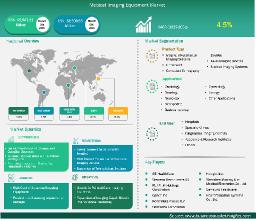
The medical imaging equipment market size is expected to reach US$ 62,509.98 million by 2031 from US$ 45,983.21 million in 2024. The market is estimated to record a CAGR of 4.5% from 2025 to 2031.
This steady growth is expected due to rising healthcare investments, innovation in Al and machine learning integration, and expanding access to healthcare in emerging economies. Future trends indicate greater demand for affordable, portable imaging products and the use of Al to enhance diagnostic quality and workflow. Also, the trend toward personalized medicine and the detection of disease in its early stages will continue to drive the growth of the market. Nevertheless, the expansion of the market is being hampered by the expensive prices of sophisticated imaging products and product recalls, which result in reputational risks.
Meeting the Demands of an Aging and Ailing Population
As the global population continues to age, healthcare systems are under pressure to manage a growing number of patients with chronic and complex conditions—like cancer, heart disease, diabetes, and neurological disorders. With early diagnosis being key to effective treatment, demand for advanced imaging solutions is surging.
Medical imaging technologies—like X-rays, MRI, CT scanners, ultrasound , and nuclear imaging —play a vital role in delivering fast, accurate, and non-invasive insights into what’s going on inside the body. These devices are now an essential part of modern clinical decision-making, helping doctors make more informed and timely treatment plans.
What’s Powering the Market Growth?
The Rise of Chronic Illnesses
We’re seeing a global spike in chronic and lifestyle-related diseases. According to the Global Cancer Observatory (GCO) , nearly 9.74 million cancer-related deaths occurred worldwide in 2022. These growing numbers highlight the urgent need for technologies that can diagnose and monitor diseases early and effectively.
The Integration of AI into Imaging
Artificial Intelligence (AI) is quickly becoming a game changer in medical imaging. AI-enhanced devices are helping healthcare providers:
Improve diagnostic accuracy
Speed up image processing
Reduce human error
Handle higher patient volumes with greater efficiency
With advanced algorithms that can detect abnormalities and recognize patterns, AI tools offer better support for radiologists and clinicians, helping them make more confident decisions.
A great example of this progress is GE Healthcare’s announcement on December 5, 2024 . The company introduced updates to its Recon DL MRI system , which now includes deep learning-based image processing. These AI-powered features improve image clarity and streamline workflows, leading to better patient outcomes—and significant cost savings over time.
Medical Imaging Equipment Market News and Key Development:
The medical imaging equipment market is evaluated by gathering qualitative and quantitative data post primary and secondary research, which includes important corporate publications, association data, and databases. A few of the key developments in the medical imaging equipment market are:
- On December 5, 2024, GE Healthcare, a US-based multinational medical device manufacturing company, announced the launch of three new advanced deep learning image processing and reconstruction solutions for their Recon DL MRI system. These MRI systems have AI-powered algorithms for enhanced image quality and streamlined workflows.
- In December 2024, NANO-X IMAGING LTD, a medical imaging technology company, announced that they had received 510(k) clearance from the US Food and Drug Administration (FDA) for its Nanox.ARC. It is a stationary X-ray system intended to produce tomographic images for the human musculoskeletal system, pulmonary, intra-abdominal, and paranasal sinus indications, adjunctive to conventional radiography, on adult patients.
- In July 2022, Spryte Medical, an advanced medical imaging technologies company, announced that its neuro Optical Coherence Tomography (nOCT) technology had been granted Breakthrough Device Designation by the US Food and Drug Administration (FDA).
Medical Imaging Equipment Market Drivers and Opportunities:
Rising Prevalence of Chronic and Complex Diseases
The world's increase in chronic and complicated diseases, including cancer, cardiovascular disease, diabetes, and neurologic conditions, is having a profound impact on the healthcare industry. Demographic changes, urbanization, lifestyle changes, and environmental factors have driven a high increase in disease incidence. For instance, according to the data published by the Global Cancer Observatory (GCO), new cancer cases were reported in 2022 across the globe. In addition, cancer resulted in 9,743,832 deaths globally in 2022.
Medical imaging is vital in early diagnosis of medical disorders, giving detailed and clear pictures of inner body structures without having to perform invasive surgical intervention. MRI, CT, and ultrasound are the most common medical imaging equipment used in hospitals. To understand a patient's condition and determine the most effective treatment, various diagnostic tools have become integral to the management of serious health issues. As diseases become increasingly prevalent and challenging to treat, medical teams require more precise and expedited methods for decision-making. In this context, imaging technology plays a crucial role.
Increasing Integration with AI
Healthcare providers have begun to look for ways to improve accuracy in their diagnoses, lower operational costs, and deal with the abundant number of patients. The use of artificial intelligence in diagnostic imaging devices has several advantages, including improved quality of diagnosis, speedier image multi-processing, improved decisions being determined by advanced algorithms that can recognize patterns, identify abnormalities, and make improved and more definitive decisions while reducing the potential of human error. Artificial intelligence's possibilities are generating serious interest in hospitals since they may have even more choices to consider upgrading to hardware that includes AI software without worrying about bias and consistency.
The possibilities have empowered manufacturers to create better systems with AI-based functions. For instance, on December 5, 2024, GE Healthcare, a multi-national corporation and medical device manufacturer from the USA announced advances in their deep learning image processing and image reconstruction solutions for their Recon DL MRI system. The newer-compatible MRI systems with AI algorithms will provide enhanced image quality as well as improved workflow. The health system will receive improved workflow and satisfaction with cost savings especially if they can further justify the higher cost of more sophisticated machines.
Future Trends to Watch
The market is evolving fast, and several trends are likely to shape its future:
More portable and affordable imaging devices to serve rural and remote areas
Increased adoption in emerging economies , thanks to expanding healthcare access
Rising interest in personalized medicine , which demands highly accurate, patient-specific imaging
Cloud-based AI imaging platforms to improve workflow and collaboration across care teams