Frac Sand Market Trends: Impact of Environmental Regulations and Alternative Proppants on Industry Expansion

Introduction
The Frac Sand Market has been a critical enabler of the shale revolution, supporting the hydraulic fracturing (fracking) processes used to unlock oil and gas from tight formations. However, increasing environmental scrutiny and the emergence of alternative proppants are reshaping the market landscape. As the global energy sector balances resource extraction with environmental accountability, the frac sand industry faces both challenges and opportunities that will define its trajectory through 2030.
Environmental Regulations Reshaping the Industry
1. Dust Emissions and Worker Health
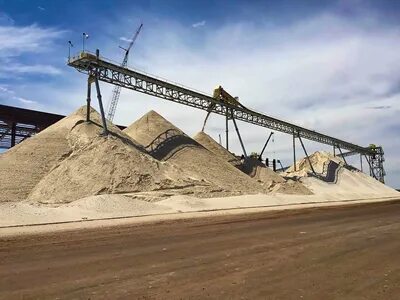
One of the most pressing regulatory issues is the control of crystalline silica dust, which is generated during sand mining, handling, and on-site application. Prolonged exposure can lead to silicosis, a serious lung disease, prompting regulatory actions:
The U.S. Occupational Safety and Health Administration (OSHA) has imposed strict exposure limits for respirable crystalline silica, requiring advanced dust suppression systems and enclosed transport methods.
Companies are investing in “last-mile logistics” technologies like containerized sand delivery and covered conveyor belts to reduce airborne particulates.
2. Water Use and Contamination Concerns
Hydraulic fracturing consumes millions of gallons of water per well, raising concerns in drought-prone regions like Texas and New Mexico. Regulatory bodies have responded with:
Water use caps and permitting delays for high-volume drilling operations.
Restrictions on sand washing and sediment discharge into water bodies.
Incentives for closed-loop water recycling systems at frac sites and mines.
These regulations are pushing operators to innovate with dry processing technologies and low-water proppant formulations, reducing the environmental impact of sand production and usage.
3. Land Reclamation and Biodiversity
Frac sand mining, especially in ecologically sensitive areas like the Midwest (Wisconsin, Minnesota), has prompted:
State-level reclamation mandates, requiring mine sites to be restored post-extraction.
Habitat protection regulations, especially for endangered species affected by large-scale surface mining.
Community-level opposition, which has led to local moratoriums and legal challenges against mine expansions.
Mining companies now face higher permitting costs and longer lead times, influencing their siting decisions and prompting a shift toward in-basin sand sources in less regulated areas.
The Rise of Alternative Proppants
As environmental pressures mount and operational efficiency becomes more critical, the industry is increasingly evaluating alternatives to traditional frac sand, particularly for high-performance wells.
1. Resin-Coated Sands (RCS)
RCS are manufactured by coating silica sand with resin to enhance:
Crush resistance in high-pressure environments.
Flowback control, reducing proppant loss and improving well productivity.
Fines migration prevention, which enhances hydrocarbon flow.
Though more expensive (often 2–3x the cost of raw sand), RCS usage is growing in:
Deep or horizontal wells with extreme downhole conditions.
Formations prone to sand flowback or well clogging.
Resin-coated sand now represents around 10–15% of total proppant usage, with a higher share in offshore and premium shale basins.
2. Ceramic Proppants
Ceramic proppants, made from sintered bauxite or kaolin, offer:
Superior strength and uniform sizing for maximum conductivity.
Performance advantages in ultra-high pressure/high-temperature (HPHT) wells.
Despite their benefits, adoption is limited due to:
High production costs, making them uneconomical for most shale operations.
Heavier weight, which requires more pumping energy and raises logistics costs.
However, with technological advances and scaling, ceramic proppants may gain share in specialized applications by 2030.
3. Sustainable and Synthetic Proppants
R&D is focused on bio-based and synthetic proppants, aiming to reduce the environmental footprint:
Recyclable glass beads, engineered foams, and biodegradable materials are in early-stage testing.
Though not yet commercially viable at scale, these alternatives reflect the industry’s growing commitment to sustainability and ESG compliance.
Market Dynamics and Shifting Demand
1. In-Basin Sand vs. Northern White Sand
Due to both cost and environmental considerations, there's a clear shift from traditional Northern White Sand to in-basin sands sourced near major shale plays:
Lower transportation emissions and costs make in-basin sand more environmentally and economically viable.
However, in-basin sand has lower crush strength and increased fines, leading some operators to use hybrid blends or mix with coated sands.
This shift has altered supply chains, reduced reliance on rail transport, and changed pricing dynamics—while also decreasing environmental impacts from long-distance shipping.
2. ESG and Investor Pressure
Investors increasingly demand that oilfield service companies and E&Ps demonstrate Environmental, Social, and Governance (ESG) responsibility:
Publicly traded frac sand companies now include sustainability reporting, emissions disclosures, and land stewardship plans in their annual filings.
Institutional investors are pushing for lower carbon intensity per barrel of oil produced, which indirectly influences proppant sourcing and selection.
Forecast: Industry Expansion Amid Constraints
While environmental regulations and alternative proppants present challenges, they also create pathways for innovation and market segmentation.
Market Forecast to 2030:
Global frac sand market to reach USD 16.1 billion, up from ~USD 8.1 billion in 2024.
Resin-coated and ceramic proppants to grow at >8% CAGR, driven by performance needs.
Traditional sand market will retain volume dominance but face pressure on margins due to compliance costs.
Strategic Implications
For Suppliers:
Invest in sustainable mining and dust suppression technology.
Expand portfolios to include coated and ceramic proppants.
Prepare for stricter reclamation and permitting requirements.
For Oilfield Service Providers:
Offer flexible proppant systems optimized for environmental performance.
Partner with logistics firms to ensure low-emission transport.
Leverage data analytics to reduce wastage and overuse of sand.
For Regulators and Communities:
Engage proactively with industry to balance economic benefits and environmental protection.
Promote innovation grants and incentives for low-impact technologies.
Conclusion
The frac sand market is evolving from a volume-driven industry to one focused on performance, sustainability, and regulatory compliance. Environmental regulations and the rise of alternative proppants are not limiting growth—they are reshaping it. Companies that embrace innovation, adapt to new compliance standards, and diversify their product offerings will be best positioned to thrive in this increasingly complex and responsible energy landscape.