Renewable Energy Transformer Market: Addressing Environmental Concerns Through Adoption of Eco-Friendly Transformer Technologies

1. Why Environmental Sustainability Matters in Transformer Deployment
Transformers are essential components in Renewable Energy Transformer Market , but traditional designs often rely on materials and processes that pose environmental risks—leakages of mineral oils, use of PCBs, high transformer noise, and embodied energy in manufacturing. As the transition to clean energy accelerates, deploying eco-friendly transformers is critical to minimizing the sector’s carbon footprint, reducing toxicity risks, and boosting public acceptance in sensitive areas.
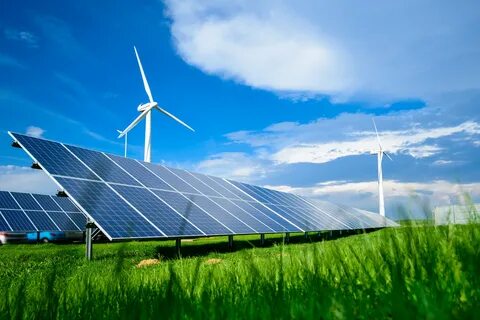
2. ♻️ Key Eco-Friendly Technologies
A. Biodegradable Insulating Oils
Vegetable-oil esters (synthetic or natural) are replacing fossil-derived mineral oil. They offer biodegradability, low toxicity, and high flash points (≈350 °C)—improving fire safety and preventing soil/water contamination in spill scenarios .
Ester-insulated units can operate 5–8× longer due to reduced winding insulation aging—and are quieter, suiting school, urban, or ecological settings .
B. Advanced Core Materials (Amorphous & Nanocrystalline)
Amorphous metal alloys reduce core losses by up to 80% compared to silicon steel—cutting energy waste and lowering CO₂ from electricity generation .
Nanocrystalline cores offer enhanced efficiency, minimized hysteresis losses, and improved reliability—supporting sustainability through reduced operation emissions .
C. High-Temperature Superconducting (HTS) Transformers
HTS devices operate with negligible resistive losses, offering compact, highly efficient alternatives. Although experimental, they promise significant long-term energy savings .
D. Solid-State Transformers (SSTs)
SSTs use power electronics rather than traditional windings, reducing material use and waste while improving grid control and adaptability—though still in early deployment stages .
E. SF₆ Alternatives & Dry-Type Options
Recognizing the high global warming potential of SF₆ gas, eco-design shifts to dry air, nitrogen, or CO₂ insulation for greener high-voltage applications .
3. ♻️ Sustainable Manufacturing & Lifecycle Practices
Energy-Efficient Production
Manufacturers increasingly use lean processes, digital twins, and automation to lower manufacturing energy use and emissions—boosting eco-efficiency .
Waste Minimization & Recycling
Scrap steel, copper, insulation, and packaging materials are recycled or reused. Hazardous fluid disposal follows strict protocols, often using biodegradable alternatives and minimizing landfill waste .
Lifecycle Assessment (LCA) & Design Optimization
LCAs allow firms to optimize core design, material selection, and insulation to reduce total lifecycle environmental impact while improving energy efficiency .
Eco-Packaging & Material Circularity
Sustainable packaging (recyclable cardboard, biodegradable materials) and using recycled steel/copper in transformer design further enhance eco-friendliness .
4. ⚖️ Regulatory Drivers & Industry Standards
EU Ecodesign Directive mandates energy efficiency and environmental compliance for transformers sold in Europe .
U.S. DOE efficiency standards (proposed 2022, effective ~2027) require amorphous steel cores in distribution transformers .
IEC, WEEE, RoHS and other regulations restrict hazardous substances, set noise limits, and govern end-of-life disposal through recycling schemes .
5. ⚖️ Environmental and Operational Benefits
Greenhouse gas reduction: Lower transformer losses lead directly to decreased power generation emissions.
Improved soil/water quality: Biodegradable oils prevent toxic contamination in spills.
Fire safety and noise reduction: High flash-point oils and optimized designs reduce fire risk and noise—especially near urban and wildlife-sensitive sites .
Extended lifespan: Higher durability materials reduce refurbishment frequency and associated environmental costs .
Economic efficiency: Despite higher CAPEX, total lifecycle costs drop—and support for clean energy competitiveness and greater public acceptance.
6. ⚖️ Market Examples & Industry Momentum
Eco‑Transformers by EthosEnergy use ester fluids (Midel7131), meet fire safety and asset-performance standards, and target renewable and substation markets .
OEMs like NDL Power, EPR Magazine, Salzer, and Electrotherm actively promote ester-based and amorphous-core transformers .
Utilities and regulators are adopting green transformer categories (“3E”: Eco‑friendly, Efficient and Economical) and standards and supporting deployment in sensitive zones and smart grids .
7. ⚖️ Challenges & Adoption Barriers
Higher upfront costs—eco designs cost more initially, deterring budget-constrained buyers.
Technological readiness—HTS and SSTs remain in prototyping stages.
Sector inertia—transition requires OEM retraining, updated procurement practices, and revised utility asset policies.
Standard adoption—global harmonization of eco‑standards and certifications is still ongoing.
8. 🔭 Outlook & Strategic Recommendations
Policy levers: Governments can accelerate adoption via tax incentives, subsidies, or green asset labeling for eco-transformers.
Utility strategy: Target eco units in urban and ecological sensitive areas, leverage longer service life and reduced maintenance, include green options in RFP frameworks.
OEM innovation: Scale ester and amorphous core production, invest in pilot HTS/SST prototypes, and build sustainable manufacturing ecosystems.
Circular economy: Expand recycling programs for decommissioned transformers and reuse materials in new builds.
🔭 Conclusion
Incorporating eco-friendly transformer technologies—biodegradable oils, amorphous/nanocrystalline cores, HTS/SST, reduced SF₆ use, and greener manufacturing—enhances renewable energy infrastructure both environmentally and economically. Though upfront costs are higher, long-term gains across reduced emissions, improved safety, extended asset life, and social license justify the transition. Strategic policy support, concerted OEM innovation, and wide-scale deployment can establish eco-transformers as standard equipment in the global energy transformation.