Mobile Phone Accessories Market review of key players and strategic mergers or acquisitions

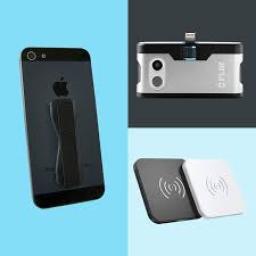
The Mobile Phone Accessories Market has become increasingly competitive, driven by innovation, branding, and evolving consumer expectations. Key players are expanding their market reach through strategic mergers, acquisitions, and targeted investments.
Major Industry Players in the Market
The mobile phone accessories market includes a mix of global giants, regional champions, and specialized niche brands. Leading companies focus on product innovation, wide distribution networks, and aggressive marketing strategies to maintain their competitive edge.
Some of the notable players include:
Samsung Electronics: Offers a wide range of OEM accessories such as chargers, power banks, covers, and wearables. Samsung leverages its device ecosystem to promote seamless compatibility with accessories.
Apple Inc.: Known for its high-margin accessory ecosystem, including AirPods, MagSafe chargers, and iPhone cases. Apple controls design, distribution, and retail through its direct channels.
Sony Corporation: Focuses on premium audio accessories like wireless headphones and earbuds. Their brand reputation supports their high-end market positioning.
Xiaomi: Offers affordable and functional accessories, particularly in Asia. Xiaomi's ecosystem approach includes everything from smart bands to phone stands.
Anker Innovations: A leader in power accessories, Anker is known for fast-charging products, cables, and travel adapters. Its global D2C strategy helps maintain a strong online presence.
Boat (India): A homegrown success story, Boat has grown into a dominant player in wearables and audio accessories, using influencer marketing and mass-market pricing.
Growth Through Strategic Mergers and Acquisitions
Mergers and acquisitions (M&A) are playing a crucial role in reshaping the mobile accessories landscape. Companies are acquiring startups or competitors to enter new markets, expand their product portfolios, or integrate emerging technologies.
Apple’s acquisition of Beats Electronics is a prime example. This move strengthened Apple’s audio accessory lineup and laid the foundation for the highly successful AirPods series.
Logitech’s acquisition of Blue Microphones allowed it to enter the professional audio and podcasting accessory space. Similarly, Samsung’s acquisition of Harman International gave it access to cutting-edge audio technologies used in mobile and wearable devices.
BBK Electronics, which owns brands like Oppo, Vivo, and Realme, often uses internal brand diversification rather than acquisitions, developing separate accessory lines tailored to different market segments.
Regional M&A Activity
In Asia, M&A is often focused on manufacturing and distribution consolidation. For example, larger players acquire regional manufacturers or logistics companies to strengthen supply chain control and reduce production costs.
In India, Boat has acquired companies in the wearable tech space to expand its product capabilities and remain ahead of new entrants. Such regional mergers often focus on scale, local innovation, and rapid execution.
In the US and Europe, M&A tends to focus on tech integration. Acquisitions related to AI, AR, and sensor-based technology have become common among brands aiming to build smarter accessories.
Investment in Emerging Technology Companies
Beyond mergers, larger accessory players are investing in technology startups specializing in AI, wireless innovation, materials engineering, and user interface design. These investments help accelerate innovation pipelines without building everything in-house.
Companies like Anker and JBL have made strategic investments in Bluetooth chip developers, enhancing performance and connectivity in their audio products. Others invest in companies focused on sustainable materials or recyclable packaging to support environmental goals.
Such strategic collaborations enable faster time-to-market and deeper product differentiation.
Competitive Strategies and Market Positioning
Key players differentiate themselves through various strategic approaches:
Product Innovation: Introducing wireless charging, MagSafe-compatible gear, biometric-enabled wearables, and noise-canceling headphones.
Branding and Influencer Engagement: Especially strong in Asia, where social media influencers drive mass adoption of trendy products.
Omni-channel Distribution: Leveraging both e-commerce and offline retail networks to reach wider demographics.
Affordability at Scale: Brands like Realme and Xiaomi offer decent-quality accessories at mass-market prices, especially in developing regions.
In mature markets, brand trust and premium experience matter more, while in developing markets, pricing, durability, and accessibility often determine market share.
Challenges Faced by Leading Brands
Despite their strengths, even leading accessory brands face several challenges:
Price wars in the low- and mid-tier segments
Counterfeit products damaging brand reputation and trust
Technological obsolescence as mobile models evolve rapidly
Supply chain disruptions, particularly during global events like pandemics or shipping crises
Increasing competition from local players offering similar features at lower costs
To overcome these, strategic alliances and continuous investment in research and development become essential.
The Role of OEM vs. Third-Party Accessory Makers
OEMs (Original Equipment Manufacturers) like Apple and Samsung offer accessories tailored to their devices, often at premium prices. These products benefit from guaranteed compatibility and strong branding but may be cost-prohibitive for some consumers.
Third-party accessory makers fill this gap by offering affordable alternatives with universal compatibility. Brands like UGREEN, Belkin, and Aukey have gained popularity by focusing on reliability and innovation without OEM price tags.
The battle between OEMs and third-party vendors continues to shape the pricing and innovation trends within the market.
Future Outlook for Market Players
Moving forward, mergers and acquisitions are expected to increase as competition intensifies and technology evolves. We’ll likely see:
Greater integration of AI, sensors, and IoT in wearables and audio accessories
Expansion into sustainable and biodegradable materials
Stronger focus on regional markets through acquisitions or partnerships
Enhanced vertical integration to reduce dependency on third-party logistics or component suppliers
As mobile ecosystems grow to include smart homes, electric vehicles, and connected devices, accessory makers will need to align their roadmaps accordingly.
Conclusion
The Mobile Phone Accessories Market is being shaped by aggressive competition, strategic collaborations, and smart acquisitions. Key players are redefining the landscape by merging technological innovation with smart business moves.
To stay ahead, brands must embrace a dynamic approach that includes continual R&D investment, responsive mergers, and tailored go-to-market strategies. The future belongs to those who adapt fastest and connect deeply with evolving consumer needs.