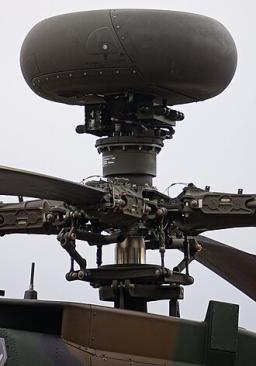
The airborne fire control radar market is undergoing a rapid transformation, driven by technological innovation and evolving defense requirements. As global threats become more dynamic and aerial platforms diversify, the demand for advanced radar systems with multifaceted capabilities has surged. These systems play a crucial role in enhancing target acquisition, threat detection, and real-time engagement. With military forces around the world upgrading their fleets and expanding into unmanned technologies, the market is witnessing several key emerging trends that are reshaping its future.
Surge in AESA Radar Deployment
One of the most prominent trends in the airborne fire control radar space is the widespread adoption of Active Electronically Scanned Array (AESA) radar systems. These radars provide superior tracking accuracy, faster target engagement, and improved reliability compared to mechanically scanned systems.
AESA radars offer the ability to track multiple targets simultaneously, resist jamming, and support low probability of intercept (LPI) operations. As defense forces look for radar solutions that can perform in electronically contested environments, AESA systems are becoming the industry standard for both new platforms and retrofit programs on legacy aircraft.
Integration of Artificial Intelligence and Machine Learning
Another transformative trend is the integration of artificial intelligence (AI) and machine learning (ML) into radar processing units. AI-enabled radar systems can distinguish between real threats and false signals, predict target behavior, and automate engagement decisions.
This reduces the workload on human operators and allows for faster, more accurate reactions in high-threat scenarios. AI is also enhancing clutter suppression and target classification, making radars more effective in complex operational environments, such as urban warfare or mountainous terrain.
Growing Role of Modular and Scalable Designs
Modern defense procurement strategies demand flexible solutions that can be tailored to various platforms and mission types. As a result, radar manufacturers are focusing on modular, scalable radar systems that allow for easier upgrades, maintenance, and cross-platform compatibility.
This trend allows a single radar family to be adapted across different aircraft—fighters, helicopters, UAVs—saving costs and simplifying logistics. Modularity also facilitates rapid deployment of software updates, enabling systems to evolve with changing threats without requiring hardware replacement.
Emphasis on Multi-Functionality
Today’s air missions require systems that can perform multiple roles within a single unit. Consequently, there is a growing trend toward multi-function radar systems that combine surveillance, tracking, electronic warfare, and weather mapping capabilities in one package.
These multifunctional systems reduce the need for separate onboard components, thereby saving weight and power while increasing mission flexibility. Multi-role capability is especially valuable for smaller platforms where space and payload capacity are limited but mission demands are high.
Rising Demand for UAV-Compatible Radar Solutions
As unmanned aerial vehicles (UAVs) become more prevalent in both reconnaissance and combat operations, there is increasing demand for lightweight, power-efficient radar systems that can be integrated into these platforms.
Miniaturized AESA radars are being developed specifically for drones, allowing them to perform precision targeting and real-time surveillance independently. This trend is opening up new opportunities in the market, as even small and medium UAVs now require high-performance radar systems for situational awareness and strike capability.
Advancement in Gallium Nitride (GaN) Technology
Another significant trend is the growing use of Gallium Nitride (GaN) semiconductors in radar transmit/receive modules. GaN offers higher power density, greater efficiency, and better heat resistance than traditional materials like Gallium Arsenide (GaAs).
These benefits translate to longer-range detection, better signal clarity, and enhanced reliability under extreme operational conditions. As GaN technology becomes more cost-effective, it is increasingly being integrated into next-generation radar systems, enhancing their overall performance and lifespan.
Cybersecurity-Ready Radar Architectures
With radars now forming part of broader digital networks and battlefield communication systems, there is a strong trend toward cybersecurity-enabled radar designs . Modern radar systems are being built with secure architecture, encrypted data links, and embedded anti-tampering features to prevent unauthorized access and cyber threats.
This trend is critical as airborne platforms become more interconnected and reliant on shared digital information. Cybersecurity is now a central element of radar system design, ensuring that sensitive tracking and targeting data remains protected in contested environments.
Increased Focus on Export-Friendly and ITAR-Free Solutions
As international demand for radar systems rises, manufacturers are increasingly developing export-compliant, ITAR-free solutions to access broader markets. Countries seeking to reduce dependence on U.S. export regulations are looking for high-performance radar systems that meet their operational needs without facing geopolitical restrictions.
This trend is leading to a more competitive global radar market, where companies offering customizable, regulation-friendly products are gaining traction in Asia, the Middle East, and Latin America.
Growth in Simulation and Virtual Testing
To reduce development costs and accelerate deployment, radar manufacturers are adopting digital twin technology and simulation environments . These tools allow engineers to test radar performance virtually before actual field deployment, enabling faster troubleshooting, refinement, and certification.
This trend also supports better operator training, as simulated scenarios help aircrews and technicians understand radar behavior in various mission settings without the risks and costs of live testing.
Conclusion
The airborne fire control radar market is rapidly evolving with emerging trends that are revolutionizing how air forces detect, engage, and defend in a changing global threat environment. From AI-driven automation and UAV adaptability to AESA deployment and modular design, these innovations are not only enhancing radar performance but also expanding their application across platforms and mission types.
As defense budgets grow and modernization efforts continue, staying ahead of these trends will be essential for both suppliers and defense agencies aiming to maintain air superiority in the age of intelligent warfare.