Solar Tracker Market Overview Featuring Key Players Technological Trends and Regional Market Shares

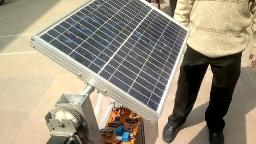
The global s olar tracker market has evolved significantly over the past decade, spurred by growing demand for renewable energy and supportive governmental policies. Solar trackers, which optimize the orientation of solar panels toward the sun, enhance energy generation efficiency by up to 25–35%, depending on the type and region. As the solar power industry scales rapidly, the solar tracker market has become increasingly competitive, with players striving to innovate, cut costs, and expand geographically. This article analyzes the current competitive landscape of the solar tracker market, highlighting key players, strategic initiatives, technology trends, and regional dynamics shaping the future of this segment.
Key Market Players and Competitive Strategies
The solar tracker industry is led by several major players, including NEXTracker (a Flex company), Array Technologies, Soltec, Arctech Solar, and PV Hardware . These companies command significant market shares and compete on technology innovation, system durability, installation ease, and after-sales service.
NEXTracker is widely recognized for its advanced single-axis tracking systems and has maintained a leadership position by investing heavily in R&D, AI-based optimization tools, and flexible software platforms.
Array Technologies emphasizes simplified mechanical design and robust performance in harsh environments, positioning itself as a cost-efficient and reliable option for utility-scale developers.
Soltec and Arctech Solar , with strong bases in Europe and Asia respectively, have been expanding into North and South America, targeting emerging markets and leveraging strong engineering capabilities.
PV Hardware has built a competitive advantage with integrated manufacturing and logistics solutions, enabling faster deployment and improved cost control.
Many smaller and regional firms also participate in the market, especially in China, India, Latin America, and the Middle East, contributing to price competition and customization for local requirements.
Technological Differentiation
Technology remains a key competitive differentiator. The industry is broadly segmented into single-axis and dual-axis trackers, with single-axis models dominating due to their balance between performance gains and cost. Innovations such as self-powered trackers, wireless communication, predictive maintenance, and machine learning-based tracking algorithms are increasingly integrated into tracker systems.
Some companies are focusing on hybrid solutions—combining tracker systems with energy storage or bifacial modules—to offer complete, value-added solutions. The integration of data analytics, remote diagnostics, and automation has also become a battleground for differentiation, especially in large-scale solar farms.
Pricing and Cost Competitiveness
Price remains a crucial factor in competitive strategy, particularly in cost-sensitive markets like India, Southeast Asia, and parts of Africa. Companies are increasingly optimizing their supply chains, reducing steel usage through design innovation, and enhancing modularity to reduce installation costs. Economies of scale, strategic partnerships, and vertical integration are being leveraged to maintain profitability in a highly competitive pricing environment.
Moreover, as module prices continue to fall, tracker systems represent a growing share of total project cost, intensifying the pressure on tracker manufacturers to deliver cost-effective yet durable solutions.
Mergers, Acquisitions, and Partnerships
Strategic alliances, joint ventures, and M&A activity are shaping the competitive dynamics. For example, NEXTracker’s acquisition by Flex allowed it to tap into advanced manufacturing and supply chain expertise, while Array Technologies’ partnerships in Latin America helped it penetrate new markets rapidly.
OEM partnerships with EPC contractors and utility developers are also becoming common, as turnkey offerings and integrated procurement solutions become more attractive to project developers.
Regional Competition and Market Penetration
Geographically, North America and Europe are mature markets dominated by a few large players. However, growth is shifting toward Asia-Pacific, Latin America, and the Middle East & Africa , where local companies are rising to challenge global incumbents. These regions offer opportunities due to increasing energy demand, favorable solar conditions, and supportive government initiatives.
In markets like India, competition is intensified by local content requirements and preferences for low-cost solutions. In China, strong local manufacturing capabilities and domestic demand drive the growth of homegrown tracker companies. Meanwhile, countries like Brazil, Chile, and the UAE are emerging as hotbeds of competitive activity due to utility-scale project pipelines.
Future Outlook
The competitive landscape of the solar tracker market is expected to become even more dynamic with the convergence of technologies such as IoT, AI, and grid integration. Players that invest in innovation, maintain pricing flexibility, and forge strategic partnerships will likely retain or enhance their market positions.
As climate policies become stricter and solar power continues to scale, solar tracker manufacturers will need to differentiate not just through products, but also through integrated solutions, performance guarantees, and long-term value creation for customers.