The Precision Diagnostics Market: Key Companies, Key Segments, and Growth Strategies

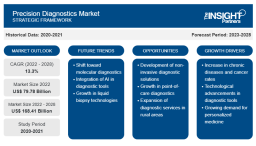
The health care sector is shifting to an extent never seen before with value-based and personalized medicine, and precision diagnostics is the hub of this revolution. With precision diagnostics being the cornerstone pillar of precision medicine, they make it possible for disease detection at the gene or molecular level and thus ensure treatment of the patient based on a patient's profile. This robust strategy optimizes diagnostic performance, minimizes treatment expense, and greatly enhances patient outcomes. While the need for early, precise, and patient-specific diagnosis is increasing, the precision diagnostics market is growing at an aggressive pace on a worldwide basis.
Market Overview
The worldwide precision diagnostics market is in tens of billions and will record a CAGR of over 13.3% through 2030. Increasing technological advancements, the rising prevalence of genetic and chronic diseases, rising healthcare spending, and the widening application of personalized medicine drive the market growth.
From genomics to proteomics, the precision diagnostics market encompasses a broad range of tools and platforms that enable healthcare professionals to review and investigate at an individual level. With bioinformatics, machine learning, and artificial intelligence increasingly involved in diagnostics, the market is poised for long-term influence and innovation.
Key Growth Strategies Driving the Market
Perhaps the best opportunity for growth in the precision diagnostics space is the integration of big data analytics and AI for quicker, more precise interpretation of complicated biological data such as genetic sequencing and imaging data. The second primary driver is growth in genomic testing driven by next-generation sequencing (NGS), enabling the precise identification of genetic mutations that are responsible for cancers, rare conditions, and inherited diseases. Firms are also using strategic partnerships and M&A to extend their technology reach—frequently co-developing companion diagnostics with their pharma partners in order to make targeted therapies possible. Expansion in liquid biopsy and other non-invasive diagnostic tests has further fueled market growth, providing less invasive, easier methods for disease detection and monitoring. Lastly, the movement towards preventive and individualized models of healthcare is driving demand since early identification of risk through biomarkers and genetics enables cost-efficient, more effective interventions. In combination, these are revolutionizing diagnostics and advancing the market.
Market Leaders in Precision Diagnostics Market
The precision diagnostics market has an energetic profile spearheaded by major healthcare and life science companies with a focus on patient-driven solutions and innovation. Quest Diagnostics Incorporated is differentiated by its extensive network of labs and state-of-the-art genetic testing equipment. QIAGEN drives innovation through its molecular diagnostic and bioinformatics solutions. Swiss Precision Diagnostics GmbH with emphasis on home diagnostic solutions enhances value to the consumer arena. Koninklijke Philips N.V. derives strength through its imaging experience and AI-powered diagnostics to enable individualized care trajectories. Lantheus Medical Imaging, Inc. is a precision imaging leader in oncology and cardiology. Siemens Healthineers AG has a wide portfolio from imaging to molecular diagnostics, and it combines AI and data analytics. Abbott, Novartis AG, and Sanofi are also investing heavily in precision diagnostics to complement their pharma pipelines and facilitate the development of companion diagnostics for targeted therapies, resulting in more effective and personalized therapies.
Key Market Segments
Precision diagnostics market is divided into type, application, and end user, each with varied usage patterns and technology demands. Type-wise and application-wise, the market includes genetic tests and also esoteric tests that are complex diagnoses employed in exceptional or rare disease. Oncology is the largest segment by application, where accurate diagnostics are applied to drive detection of cancer as well as customized treatments. Other important applications are cardiology, for the identification of genetic cardiac conditions; respiratory disorders, like asthma and COPD; and immunology, where diagnostics assist in the management of autoimmune and infectious diseases. Clinical laboratories have the largest market share based on end user as they have the equipment for high-level molecular testing. Hospitals are fast embracing the use of these devices in point-of-care and inpatient diagnostics, with the homecare market expanding quickly with direct-to-consumer genetic testing and remote patient monitoring. These markets mirror the widespread and changing need for precision diagnostics.
Future Outlook
The destiny of precision diagnostics cannot be detached from the continuous evolution of genomics, bioinformatics, artificial intelligence, and wearable health technologies. Linking diagnostic platforms to electronic health records and real-time patient information will ensure that the system is integrated and efficient. Increased need for point-of-care testing (POCT) and direct-to-consumer genetic tests will drive diagnostics to the patient's door, enabling them to make educated healthcare decisions.
As the regulatory systems become increasingly less regulatory and the cost of genomic technologies decreases, precision diagnostics will be more accessible, particularly for low- and middle-income nations. The ability to advance multi-omics techniques that integrate genomic, transcriptomic, and proteomic information also has enormous potential to transform disease diagnosis and treatment planning.
Conclusion
Precision Diagnostics Market is no longer a hopeful idea—it's an essential component of healthcare today. With its potential to provide timely, personalized, and accurate insights, it is revolutionizing disease detection and treatment. As technological advancement continues to rise and find its way into healthcare practice, the market for precision diagnostics is on track for long-term, disruptive growth. Organizations that invest in this area—be it technology advancement, strategic partnerships, or patient engagement—will lead a new generation of medical science.