Stainless Steel Market: Role in Automotive Lightweighting and Durability

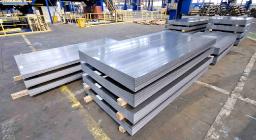
The global stainless steel market is experiencing robust growth, largely driven by its increasing applications in the automotive industry. As car manufacturers strive to meet stringent emission standards, enhance vehicle safety, and improve fuel efficiency, lightweighting and durability have become top engineering priorities. Stainless steel, with its unique combination of strength, corrosion resistance, and formability, plays a vital role in this transformation.
Why Stainless Steel in Automotive Applications?
Stainless steel offers multiple benefits that make it an ideal material for modern vehicles:
High strength-to-weight ratio: Contributes to weight reduction without compromising structural integrity.
Corrosion and heat resistance: Ensures longevity, especially in exhaust systems and underbody components.
Recyclability: Aligns with automotive sustainability goals and circular economy principles.
Aesthetic appeal: Used in trims and interiors due to its clean, modern look.
Lightweighting: Meeting Efficiency and Emission Goals
The push toward lighter vehicles is driven by the need to:
Increase fuel efficiency in internal combustion engine (ICE) vehicles.
Enhance range in electric vehicles (EVs).
Comply with global emission regulations, such as EU CO₂ limits and US CAFE standards.
Stainless steel grades such as ferritic and martensitic alloys offer significant weight reduction potential while maintaining or even improving crash performance.
Key Components Benefiting from Lightweight Stainless Steel:
Exhaust systems (mufflers, catalytic converters)
Fuel tanks
Structural reinforcements and chassis parts
Battery enclosures in EVs
Durability: Extending Vehicle Lifespan
Automotive manufacturers are focusing on longer-lasting materials to enhance vehicle reliability and reduce lifetime maintenance costs. Stainless steel meets this need due to:
Superior corrosion resistance, especially in harsh climates or salted roads.
High temperature tolerance, ideal for engine and exhaust parts.
Wear resistance, which reduces part degradation under mechanical stress.
This durability supports extended warranties and better total cost of ownership (TCO), both key selling points in today’s automotive market.
Emerging Applications in Electric and Hybrid Vehicles
As the global shift toward electrification accelerates, stainless steel is being adopted for:
Battery protection casings
Cooling system components
Electrical enclosures and connectors
Lightweight body panels and crash structures
Its non-magnetic properties also make certain stainless steel grades suitable for high-frequency electronic environments in EVs.
Industry Trends and Innovations
Development of high-performance austenitic stainless steels for improved ductility and crash resistance.
Integration with hybrid material systems, combining stainless steel with plastics or aluminum to balance strength and weight.
Laser welding and hydroforming techniques for complex part geometries with minimal material usage.
3D printing of stainless steel parts, reducing production time and enabling customization.
Regional Market Insights
Asia-Pacific, particularly China and India, is a major driver of stainless steel demand in automotive production due to rapid industrialization and rising vehicle ownership.
Europe leads in lightweighting research, with many OEMs adopting stainless steel for both ICE and electric vehicle platforms.
North America continues to focus on SUV and truck platforms, where durability and corrosion resistance are critical.
Challenges and Future Outlook
Challenges:
Competition from lighter materials like aluminum and carbon fiber.
Higher initial costs compared to mild steel.
Processing complexity in forming high-strength stainless steel.
Future Outlook:
Between 2025 and 2030, the stainless steel market in the automotive sector is expected to grow steadily due to:
Accelerating EV adoption
Advancements in stainless steel manufacturing
Rising global focus on vehicle sustainability and safety
Conclusion
The stainless steel market is playing a pivotal role in the automotive industry's evolution toward lighter, safer, and longer-lasting vehicles. Its unique properties position it as a key material in achieving engineering, environmental, and performance objectives. As manufacturers continue to innovate, stainless steel will remain integral to the future of automotive design and production.